

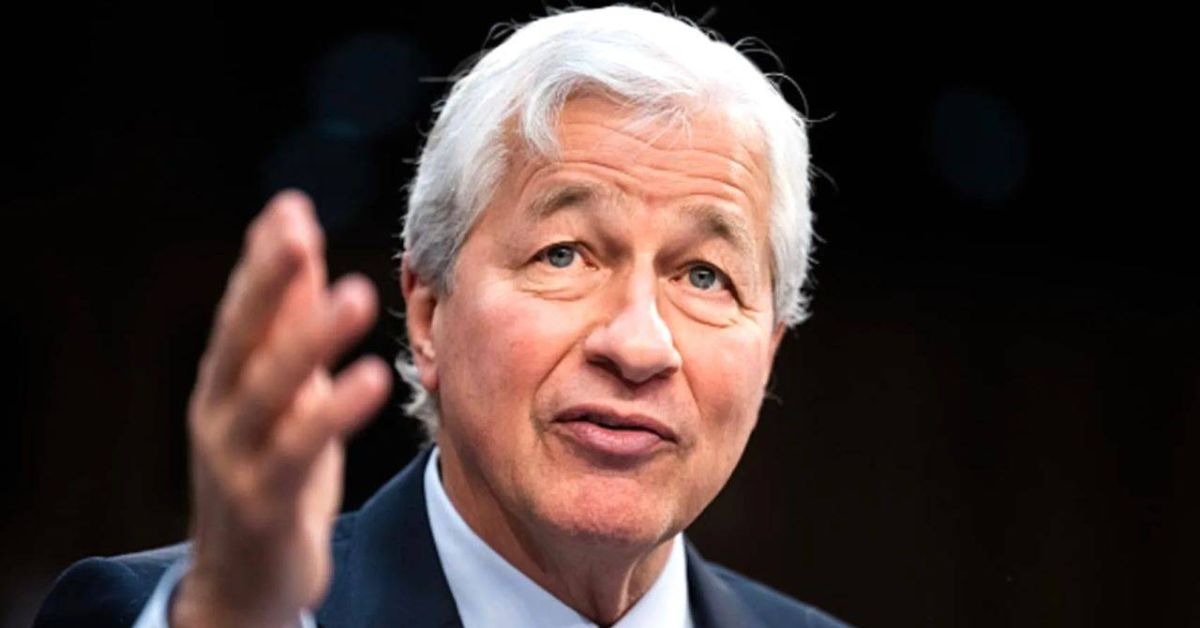
If you follow Wall Street at all, you already know the name. Jamie Dimon is the chairman and CEO of JPMorgan Chase, the largest bank in the United States by assets. He’s been called the “King of Wall Street.”
He’s survived a financial crisis, a London Whale scandal, a throat cancer diagnosis, emergency heart surgery, and multiple rounds of political fire. Through all of it, he kept building wealth. Quietly. Steadily. And without the flashy drama you’d expect from a man sitting atop nearly $4 trillion in bank assets.
So what exactly is Jamie Dimon net worth in 2026? His estimated personal fortune sits at around $3 billion, making him one of the rare bank executives to genuinely cross the billionaire threshold.
This article breaks it all down. You’ll get the real numbers, the full career story, the salary history, the real estate, the lifestyle, and the bigger picture of what Jamie Dimon’s wealth actually means for the future of banking.
Jamie Dimon Profile Summary
| Category | Details |
| Full Name | James “Jamie” Dimon |
| Profession | Banker, Business Executive |
| Position | Chairman & CEO of JPMorgan Chase |
| Net Worth | ~$2.1 Billion |
| Annual Salary | ~$27.5 Million (plus bonuses/stock) |
| Company | JPMorgan Chase & Co. |
| Industry | Investment Banking & Finance |
| Nationality | American |
| Education | Tufts University, Harvard Business School (MBA) |
| Known For | Leading the largest U.S. bank, Wall Street influence |
| Major Wealth Source | Salary, stock holdings, executive compensation |
| Notable Status | One of the few billionaire non-founder CEOs |
What Is Jamie Dimon’s Net Worth Right Now?
As of 2026, Jamie Dimon’s personal fortune is estimated at around $2.8 to $3 billion. Different sources give slightly different figures depending on JPMorgan Chase’s stock price at the time of reporting, but they all land in the same ballpark. According to SEC filings, James Dimon owns approximately 6,288,415 shares of JPMorgan Chase stock, with a value exceeding $2.0 billion as of April 2026.
The reason the number moves around is simple. Most of Dimon’s wealth sits in JPMorgan stock. When the stock goes up, so does his net worth. When it dips, so does his paper wealth. As JPMorgan’s stock was trading at around $240 per share in early 2025 a sixfold increase from when Dimon became CEO in 2006 the value of his stake had grown dramatically compared to industry benchmarks, outpacing the S&P 500’s 370% gain over the same period.
Think of it this way. Dimon didn’t just manage the bank. He bet on it. He held his shares for years while others cashed out. That patience paid off in a way that no bonus check ever could.
| Wealth Source | Estimated Value |
| JPMorgan Chase stock holdings | ~$2.0–$2.3 billion |
| Annual compensation (2025) | $43 million |
| Real estate portfolio | ~$45–65 million |
| Other investments | Estimated hundreds of millions |
| Total estimated net worth | ~$2.8–$3 billion |
His financial rise, built on strategic thinking and quiet perseverance, has been remarkably consistent and far from spectacular in the traditional billionaire sense. He isn’t Elon Musk. He doesn’t tweet his way to a higher valuation. He just shows up, runs the bank, and collects his shares.
Jamie Dimon’s Salary and Annual Compensation: A Full Breakdown
Here’s where it gets really interesting. Dimon’s base salary is surprisingly modest for a man of his stature. JPMorgan’s board awarded him a $1.5 million base salary for 2025, with $41.5 million in performance-based incentive compensation, bringing his total 2025 package to $43 million, a 10.3% increase from 2024.
That $1.5 million base might sound like a lot to most people. But in the context of his total pay? It’s basically a rounding error. The real money comes through performance share units (PSUs) company stock awarded only when the bank hits specific financial targets.
These PSUs tie 100% of Dimon’s equity-based compensation to ongoing performance metrics, representing 87% of his total variable incentive compensation, designed to align with shareholders’ long-term interests.
Factoring in stock value gains, dividends, and compensation, Dimon was set to see approximately $770 million for his work in 2025, according to reporting verified by independent compensation firm Farient Advisors. That’s not a typo. $770 million in a single year most of it coming from the appreciation of stock awards given over multiple years, including a massive retention package.
Here’s a quick look at how his compensation has evolved:
| Year | Total Compensation |
| 2011 | $23 million |
| 2012 | $11.5 million (cut after London Whale) |
| 2013 | $20 million |
| 2022 | $34.5 million |
| 2023 | $36 million |
| 2024 | $39 million |
| 2025 | $43 million |
From Queens to Wall Street: Jamie Dimon’s Career Journey
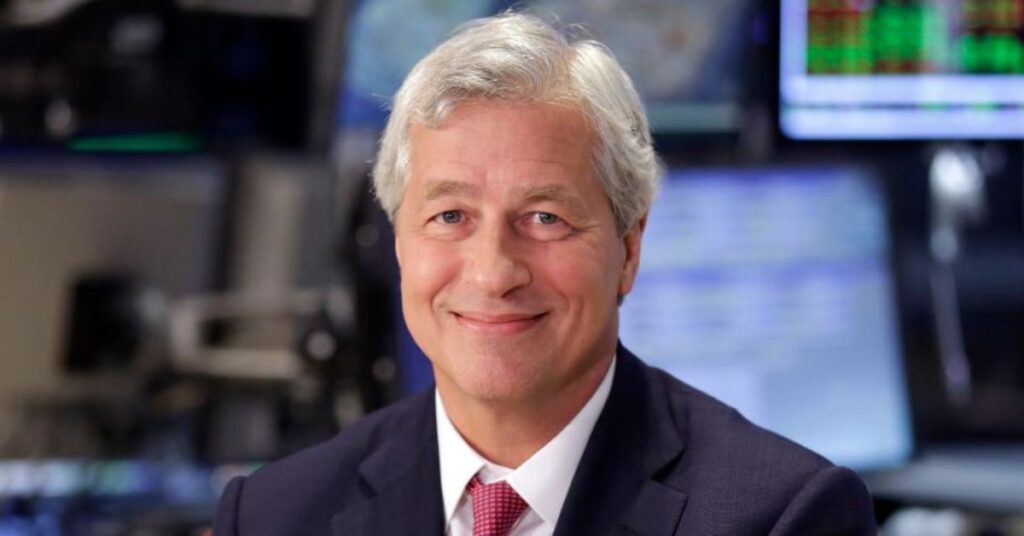
You can’t understand Jamie Dimon’s financial success without understanding where he came from. Dimon was born on March 13, 1956, in New York City. He grew up in the Jackson Heights neighborhood of Queens. His family already had deep ties to finance — his paternal grandfather was a Greek immigrant who worked as a banker, and both his father and grandfather were stockbrokers at Shearson.
Finance wasn’t just a career choice for Dimon. It was practically in his blood. He attended the Browning School, a private boys’ prep school on the Upper East Side, before earning a degree summa cum laude from Tufts University, where he studied psychology and economics. He then went to Harvard Business School, graduating with an MBA in 1982.
His early choice to work with Sandy Weill at American Express rather than take the more prestigious route to Goldman Sachs revealed a keen preference for mentorship over status. That choice seems unconventional in hindsight. But Weill taught Dimon how to build banks, not just analyze them. That hands-on education proved more valuable than any Goldman prestige could have been.
The Citigroup Years and the Famous Firing
Dimon followed Weill through a series of mergers and acquisitions that eventually led to the creation of Citigroup in 1998. He served as COO of both the insurer Travelers and the brokerage firm Smith Barney from 1990 to 1998, when he became president of Citigroup.
Then came the famous split. In 1998, Weill fired Dimon — reportedly over internal power struggles and personal tensions. It was the biggest setback of Dimon’s professional life. Many predicted his career would never recover. They were spectacularly wrong.
Dimon’s 1998 departure from Citigroup, his largest professional setback, ultimately shaped his most significant comeback. He spent two years regrouping, then took a job that most Manhattan bankers would have turned down flat.
Bank One: The Comeback Story
In March 2000, Dimon became CEO of Bank One, the United States’ fifth largest bank. I was struggling. Its stock was underperforming. Its culture was fractured. Most people saw it as a step down for someone of Dimon’s caliber.
He saw an opportunity. Within four years of taking over the faltering Bank One, he turned it into a successful organization. Cost discipline. Cultural reform. Clear strategy. The same playbook he’d later use at JPMorgan on a much larger scale.
When JPMorgan Chase merged with Bank One in July 2004, Dimon became president and chief operating officer of the combined company. On December 31, 2005, he was named CEO of JPMorgan Chase. He was 49 years old. The real chapter was just beginning.
How Jamie Dimon Built His $3 Billion Fortune at JPMorgan Chase
Two Decades of Compounding Wealth
Dimon became CEO of JPMorgan Chase at the start of 2006. What happened next is a masterclass in long-term wealth accumulation. JPMorgan shares have increased by more than 500% since 2006, greatly outperforming industry competitors and producing steady, compounding returns.
But here’s the key detail most people miss. Dimon didn’t sell. While other executives routinely offloaded shares the moment they vested, Dimon held on. He kept accumulating. He amassed an ownership stake in JPMorgan of nearly 8.5 million shares, and only began shaving off his holdings in a small handful of pre-planned sales in 2024, beginning with a sale valued at $150 million.
That strategy buy, hold, don’t panic is exactly what he preaches to JPMorgan’s clients. He practices what he preaches. That’s a rare quality on Wall Street.
The 2021 Retention Award: A $75 Million Vote of Confidence
In 2021, JPMorgan’s board did something unusual. They gave Dimon a special one-time award worth $75 million in stock appreciation rights to retain him while the board worked through succession planning. This year, he’ll see a 1.5 million stock appreciation right grant vest, tied to this special one-time award the board gave him in 2021.
That’s not just a bonus. That’s a declaration. The board was essentially telling the market: Dimon is JPMorgan, and losing him would be catastrophic. Analysts even coined a term for it — the “Jamie premium” — referring to the extra value JPMorgan’s stock carries simply because Dimon leads it. Analysts predict that Dimon’s departure could significantly impact JPMorgan’s stock value, reflecting this so-called “Jamie premium” associated with his leadership.
Navigating the 2008 Financial Crisis
No discussion of Dimon’s wealth-building is complete without addressing 2008. When Lehman Brothers collapsed and the global financial system teetered on the edge, most big bank CEOs were either frozen in panic or scrambling for government bailouts.
Dimon was negotiating acquisitions. JPMorgan bought Bear Stearns for $2 a share (later raised to $10) with government backing. It acquired Washington Mutual’s assets. While competitors were drowning, JPMorgan was buying distressed assets at fire-sale prices.
He is one of the last sitting Wall Street leaders to have navigated the 2008 financial crisis, the subsequent passage of the Dodd-Frank reform act, and now the AI boom.
The crisis didn’t shrink his fortune. It expanded it.
Jamie Dimon’s JPMorgan Chase: The Bank Behind the Billions
What Makes JPMorgan Chase So Dominant?
Understanding Jamie Dimon’s net worth means understanding the machine he built. JPMorgan Chase has about $3.9 trillion in assets, making it the largest bank in the United States by a significant margin. It operates across investment banking, consumer banking, commercial banking, financial transaction processing, asset management, and private banking.
JPMorgan reported strong results in early 2026, posting $46.8 billion in managed revenue in Q1, even after absorbing a significant loan-loss reserve tied to the Apple Card portfolio acquisition. That’s not a quarter that’s a single quarter’s managed revenue. For context, many Fortune 500 companies don’t generate that in an entire year.
Under Dimon’s leadership, the bank has delivered record profits for years running. JPMorgan reported record-breaking revenue for the seventh year running in 2024. Seven consecutive years of records. That kind of consistency is almost unheard of in global banking, where regulatory pressures, market cycles, and geopolitical risk constantly threaten earnings.
Regulatory Challenges and the London Whale
Dimon’s tenure hasn’t been scandal-free. In 2012, a trader nicknamed the “London Whale” racked up losses that eventually totaled $6 billion. JPMorgan ultimately paid $920 million in regulatory fines, and Dimon’s 2012 compensation was cut in half from $23 million to $11.5 million.
More recently, in 2024, JPMorgan Chase was fined $348 million by the Federal Reserve and the Office of the Comptroller of the Currency for failing to properly monitor billions of trades across more than 30 global exchanges between 2014 and 2023. And in 2025, Germany’s financial regulator BaFin imposed a €45 million anti-money-laundering penalty.
These are real hits. But they’re speed bumps, not roadblocks, for an institution generating tens of billions in profit annually. Dimon addresses them head-on and moves on. That directness is part of his brand.
Jamie Dimon Net Worth vs. Other Banking CEOs
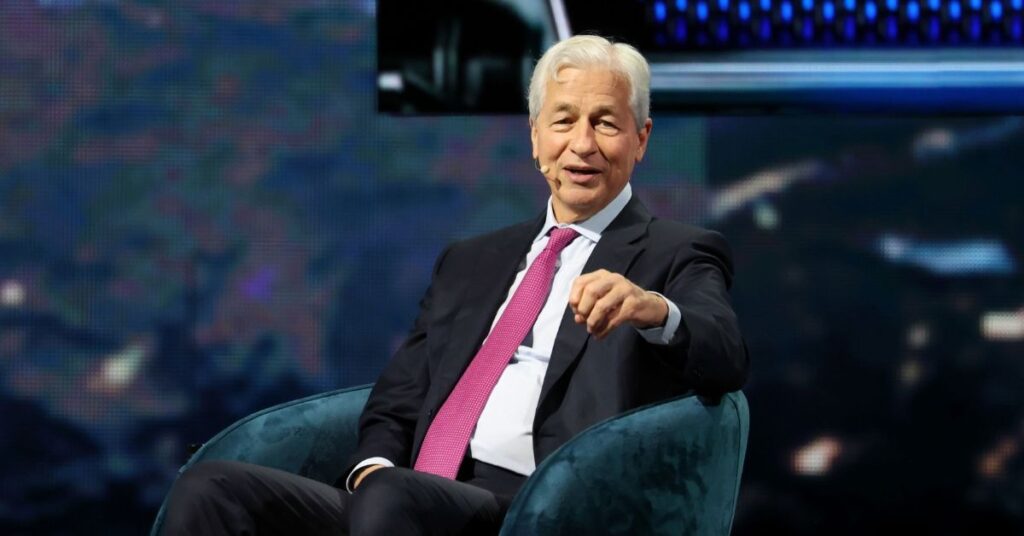
Here’s a fair question: if Dimon runs the biggest bank, is he also the richest banking CEO? Not exactly. His wealth is enormous, but it’s relatively modest compared to tech titans like Elon Musk or Jeff Bezos. And even within banking, his annual pay doesn’t always top the charts.
| CEO | Bank | 2024–2025 Compensation |
| Jamie Dimon | JPMorgan Chase | $43 million |
| David Solomon | Goldman Sachs | $39 million |
| Jane Fraser | Citigroup | $34.5 million |
| Brian Moynihan | Bank of America | $35 million |
| James Gorman/Pick | Morgan Stanley | $34 million |
| Charlie Scharf | Wells Fargo | $31.2 million |
These figures show that Dimon ranks near the top but not always first in annual CEO compensation among major bank peers. However, total accumulated wealth tells a very different story. Because Dimon held his JPMorgan stock for nearly two decades while the price multiplied sixfold, his net worth far surpasses most of his peers in the banking sector.
Although his fortune is modest compared with the wealth of major tech founders, it remains one of the largest fortunes ever built by a professional banking executive, someone who didn’t found the company but grew rich by running it exceptionally well.
Jamie Dimon’s Real Estate Portfolio
Dimon lives well. But unlike some billionaires who collect mega-yachts and trophy penthouses as status symbols, his real estate choices reflect his substantial, strategic, and not flashy personality.
The Bedford Estate is his primary family home. The property sits at Sarles St, Bedford Corners, New York, spreading across nearly 30 acres of land. The structure features 6 bedrooms and 8.5 bathrooms. According to Redfin, the property was sold to Dimon in 2007 for $17,050,000.
Surrounded by dense forest and well off any public road, it offers the kind of privacy that money genuinely can’t buy in Manhattan. The facade is Georgian in style pale stone and brick, large multi-pane windows across both floors, and mature plantings that soften the exterior. The whole design is symmetrical and restrained.
The Manhattan Apartment remains his weekday base. In 2004, he purchased a 10-room co-op apartment on Park Avenue for $4.9 million, though its current market value is estimated to be significantly higher given Manhattan real estate appreciation over two decades.
He also holds vacation properties in Connecticut and reportedly in Florida. His real estate portfolio is valued at approximately $45–65 million, representing roughly 3–4% of his total wealth. That ratio tells you something important.
Unlike some executives who plow most of their wealth into tangible assets, Dimon keeps the bulk of his fortune in the bank stock he helped build. He is, in the most literal sense, invested in JPMorgan’s success.
Jamie Dimon’s Views on the Economy, Markets, and the Future
Part of what makes Jamie Dimon so compelling beyond the net worth is that he doesn’t shy away from saying what he thinks. His annual letter to shareholders is required reading on Wall Street. Financial journalists, hedge fund managers, and policymakers all pay close attention.
In October 2025, Dimon told the BBC that he saw an increased risk of a major U.S. market correction within the next six months to two years, described the United States as a less reliable global partner, and reaffirmed his confidence in the Federal Reserve’s independence.
He also had pointed views on tariffs and trade policy. After Donald Trump took office again in January 2025, Dimon said he supported Trump’s tariff policies. However, Dimon had previously said the tariffs were a threat to the U.S. economy and in March 2025, he said tariffs contributed to uncertainty in the markets. That’s not a contradiction. That’s a pragmatic banker adapting his analysis to shifting facts.
On artificial intelligence, Dimon has been unusually forward-thinking for a traditional banker. JPMorgan has invested heavily in AI infrastructure, and Dimon has publicly described AI as potentially transformative for financial services both in productivity and risk management.
His political connections run deep but remain deliberately nonpartisan. In August 2024, Dimon published an op-ed in The Washington Post stating that the next president must “restore our faith in America,” endorsing neither Trump nor Kamala Harris. He walks a careful line between the financial sector’s regulatory interests and his own personal credibility as an independent voice.
Jamie Dimon’s Health Challenges and Personal Resilience
Dimon’s story isn’t just about money. It’s also about resilience in the face of genuinely life-threatening health challenges.
Dimon was diagnosed with throat cancer in 2014 and underwent emergency heart surgery in 2020, but has since recovered and continues to lead JPMorgan Chase. Both episodes were serious enough that succession discussions accelerated inside JPMorgan’s boardroom. Yet he returned to work in both cases, quickly and fully.
That kind of personal grit facing your own mortality and going back to managing a $4 trillion bank says a great deal about the man. It also says something about JPMorgan’s institutional strength that the bank barely missed a beat during either health crisis.
Dimon married Judith Kent in 1983, whom he met at Harvard Business School. They have three daughters: Julia, Laura, and Kara Leigh. Despite the relentless pace of his professional life, he’s maintained that family foundation throughout.
Jamie Dimon’s Philanthropy and Legacy
Not all of Dimon’s impact shows up in net worth calculations. He has made significant contributions to health and education programs through his family foundation. The James and Judith K. Dimon Foundation has emerged as a particularly positive influence in marginalized communities, representing a more subdued side of a man frequently depicted through the incisive prism of Wall Street coverage.
JPMorgan Chase itself has committed billions to workforce development, affordable housing, and small business lending under Dimon’s leadership programs that reflect his stated belief that capitalism must work for everyone, not just shareholders.
In the neighborhoods where he resides, Dimon is known for supporting local charities, educational institutions, and community projects. It’s not the kind of headline-grabbing philanthropy you see from some tech billionaires. It’s quieter, more targeted, and arguably more effective.
Jamie Dimon’s Succession and Future Plans
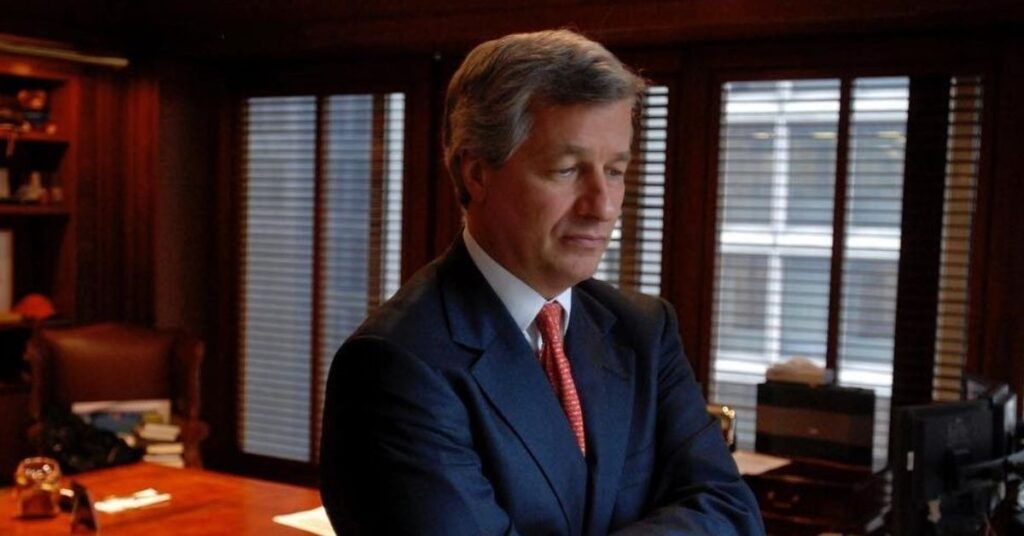
The question everyone on Wall Street asks and nobody quite wants answered is: what happens after Dimon? Potential succession candidates include Jennifer Piepszak, Marianne Lake, and Mary Erdoes, and analysts predict that Dimon’s departure could impact JPMorgan’s stock value, reflecting the so-called “Jamie premium.”
As for timing, Dimon himself has been characteristically vague. In June 2025, Dimon said his retirement is still “several years away” and that he may stick around longer than previously expected. He’s 70 years old. He’s already one of the longest-serving CEOs of a major U.S. bank. And by his own account, he’s not done yet.
Despite the undeniable size of Dimon’s fortune, it remains openly and closely linked to his performance, a reflection of what has been earned and protected through real-time scrutiny, in contrast to tech founders whose valuations fluctuate with sentiment.
That’s actually a refreshing aspect of his wealth. It’s not based on hype. It’s based on results, quarter after quarter, year after year, for nearly two decades.
Why Jamie Dimon’s Wealth Story Matters Beyond the Numbers
There’s a reason Jamie Dimon’s net worth captures so much attention. It’s not just the dollar figure. It’s what the figure represents. Most billionaires today built their wealth through founding a company, taking it public, and watching the valuation explode.
Dimon didn’t do that. He walked into a struggling institution, turned it around, and then spent two decades executing a strategy so consistently that the market rewarded him with compounding returns year after year.
Jamie Dimon established a standard in addition to a career. For any future banker who measures success by longevity and trust, that criterion will remain remarkably similar to his own.
His approach to wealth offers some genuinely useful lessons. He held his company’s stock instead of rushing to sell. He chose mentorship over prestige early in his career. He treated setbacks like the Citigroup firing, the London Whale scandal, even cancer as problems to solve rather than reasons to slow down. And he stayed focused on the long game when most people around him were fixated on the next quarter.
That’s not a formula you can copy exactly. But it’s a mindset you can certainly study.
FAQ’s
What is Jamie Dimon net worth in 2026?
Jamie Dimon’s net worth is estimated at around $2.8–$3 billion, mostly tied to JPMorgan stock.
How did Jamie Dimon make his money?
He built his fortune through decades as a top banking executive, mainly via salary, bonuses, and stock holdings.
Is Jamie Dimon a billionaire?
Yes, Jamie Dimon is a billionaire with a net worth close to $3 billion.
What company does Jamie Dimon run?
He is the CEO and chairman of JPMorgan Chase, the largest bank in the United States.
How much does Jamie Dimon earn per year?
He earns tens of millions annually, including about $40M+ in salary and bonuses in recent years.
What is the main source of Jamie Dimon’s wealth?
Most of his wealth comes from millions of shares he owns in JPMorgan Chase.
Conclusion: The True Measure of Jamie Dimon Net Worth
In the end, Jamie Dimon net worth is more than just a billionaire figure; it represents decades of calculated risks, bold leadership, and financial dominance at the highest level. From navigating economic crises to leading the largest U.S. bank, Dimon has proven his ability to turn challenges into massive opportunities.
His wealth is built not only on salary and bonuses but also on strategic stock holdings and long-term vision. What truly sets him apart is his influence over global finance and decision-making power on Wall Street. As markets evolve, his fortune and legacy continue to grow, making him a lasting symbol of power, resilience, and elite banking success.
