

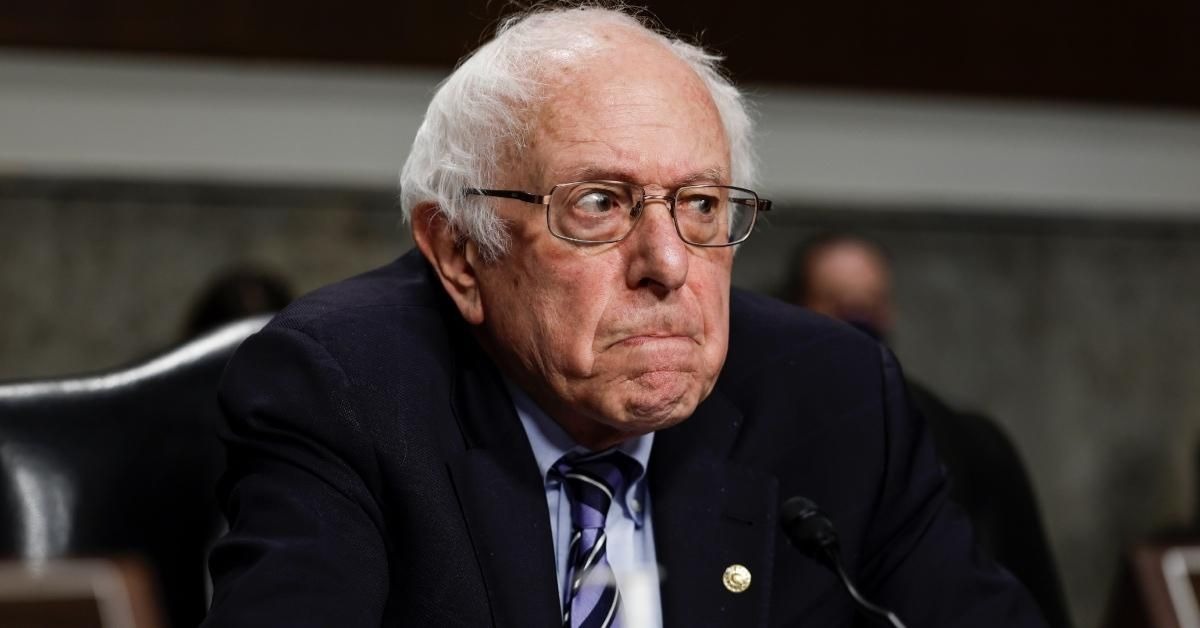
Few politicians in modern American history have sparked as much debate about money, power, and principle as Bernard Sanders better known simply as Bernie. Here’s the irony that’s impossible to ignore: the man who built his entire career railing against millionaires and billionaires is himself a millionaire.
And yet, when you look at where that money actually comes from, the story gets genuinely interesting. Bernie Sanders’ net worth is estimated to be between $2 million and $3 million as of 2026 placing him comfortably in the millionaire category, but far below the level of wealth typically associated with top-tier U.S. politicians or business figures.
So how did a Brooklyn kid from a struggling family end up as both America’s most famous democratic socialist and a published millionaire? Let’s dig in.
Bernie Sanders Profile Summary
| Detail | Information |
| Full Name | Bernard Sanders |
| Date of Birth | September 8, 1941 |
| Place of Birth | Brooklyn, New York, USA |
| Age (2026) | 84 years old |
| Nationality | American |
| Ethnicity | Jewish (Ashkenazi) |
| Religion | Jewish |
| Profession | Politician, Activist, Author |
| Political Affiliation | Independent (caucuses with Democrats) |
| Ideology | Democratic Socialism |
| Current Role | U.S. Senator from Vermont |
| Spouse | Jane O’Meara Sanders (m. 1988) |
| Children | 4 (1 biological, 3 stepchildren) |
| Net Worth (2026) | $2M – $3M |
| Annual Senate Salary | $174,000 |
| Education | University of Chicago (B.A. Political Science, 1964) |
| Social Media | @BernieSanders (all major platforms) |
Bernie Sanders Wikipedia
Bernard Sanders, born September 8, 1941, is an American politician and activist serving as the senior United States senator from Vermont, a seat he has held since 2007. He is the longest-serving independent in U.S. congressional history, but maintains a close relationship with the Democratic Party, having caucused with House and Senate Democrats for most of his congressional career.
Wikipedia describes him as one of the defining political figures of the early 21st century, a man who made Medicare for All, the Green New Deal, and free public college mainstream political conversation. His Wikipedia page is one of the most visited for any sitting U.S. senator, a testament to just how large his footprint in American political life really is.
Ideologically a democratic socialist, Sanders is regarded as one of the main leaders of the modern American progressive movement. Born into a working-class Jewish family and raised in New York, Sanders attended Brooklyn College before graduating from the University of Chicago in 1964.
While a student, he was a protest organizer for the Congress of Racial Equality (CORE) and the Student Nonviolent Coordinating Committee (SNCC) during the civil rights movement. That early activist identity never left him. It became the engine of everything that followed.
Who Is Bernie Sanders?
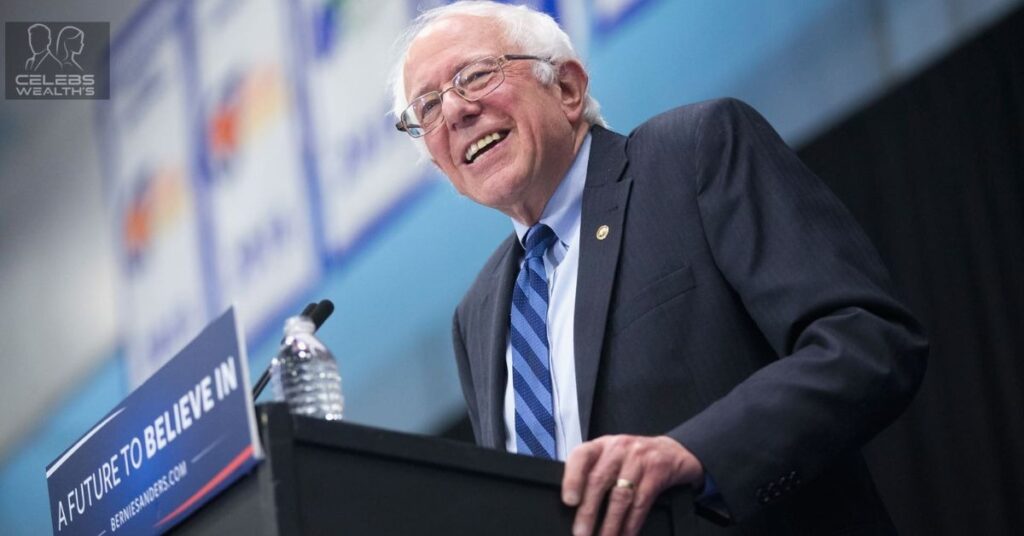
Who is Bernie Sanders Vermont senator and why does the answer matter so much to millions of Americans? Simply put, Sanders is the longest-serving independent congressman in U.S. history, a four-term Burlington mayor, a two-time presidential candidate, and one of the most recognizable faces in global progressive politics.
Bernie Sanders is a U.S. Senator from Vermont. In 2006, he was elected to the U.S. Senate after 16 years as Vermont’s sole congressman in the House of Representatives. Bernie is now serving his fourth term in the U.S. Senate after winning re-election in 2024 with 63 percent of the vote.
What makes Sanders genuinely unusual is consistency. His message in 2026 is virtually identical to what he said in 1981. He’s been talking about income inequality, workers’ rights, and universal healthcare for decades long before these ideas were fashionable on the national stage.
Sanders grew up in the Flatbush area of Brooklyn, New York. The family struggled financially, and income inequality would later become one of his key political issues. It’s hard to fake that kind of origin story.
What Is Bernie Sanders’s Real Name?
Bernard Sanders that’s the full, legal name. “Bernie” is simply the nickname that stuck, and it stuck hard. Bernard “Bernie” Sanders became the junior U.S. senator from Vermont in 2007. He became the longest-serving Independent Congress member in history, having previously served as Vermont’s sole U.S. representative from 1991 to 2007.
The name “Bernie” carries a kind of approachability that “Bernard” doesn’t — and for a politician who built his brand on being a regular guy fighting for working people, that probably wasn’t an accident.
Where Did Bernie Sanders Live?
Sanders has called Vermont home since the late 1960s. Upon returning to the United States, Sanders moved to Vermont, participating in the communal back-to-the-land movement and working as a union carpenter and freelance journalist.
He settled in Burlington, and the city shaped him as much as he shaped it. As of 2025, Sanders and his wife own two properties in Vermont: a 2,500-square-foot, 4-bedroom, 2.5-bath single-family home located in Burlington that Sanders purchased in 2009, currently valued by Zillow at around $741,000.
In 2016, Sanders bought a 4-bedroom cabin on the shores of Lake Champlain for $575,000, with Zillow estimating its value at approximately $932,700 in 2025. He also previously owned a Washington, D.C. townhouse near Capitol Hill, which was sold in 2021 for $422,000.
Where Is Bernie Sanders Working Now?
Right now, Senator Sanders is very much in the fight. Bernie Sanders (independent) is a member of the U.S. Senate from Vermont. He assumed office on January 3, 2007. His current term ends on January 3, 2031.
As of 2026, he serves as the Ranking Member of the Senate Health, Education, Labor and Pensions (HELP) Committee and he’s using that platform aggressively. In February 2025, weeks after Donald Trump was inaugurated for a second time, Sanders began a “Fight Oligarchy” tour of Midwest districts that Republicans won but could be winnable by Democrats in the 2026 House elections.
He held rallies in Omaha, Nebraska; Iowa City, Iowa; Kenosha, Wisconsin; and Warren, Michigan. At 84, the man shows no signs of slowing down.
Educational Background
Biography of Bernie Sanders early life wouldn’t be complete without his school years. Born in 1941 in Brooklyn, Sanders attended James Madison High School, Brooklyn College and the University of Chicago. His academic years were less about lectures and more about activism; he was out on the streets organizing, protesting, and getting arrested for causes he believed in.
College
Sanders attended Brooklyn College, then finished at the University of Chicago, graduating with a degree in political science. His college years shaped his worldview far more through activism than academics.
At Chicago, he joined the Congress of Racial Equality (CORE) and helped organize sit-ins against segregated housing. He attended the 1963 March on Washington for Jobs and Freedom, where Martin Luther King Jr. gave the “I Have a Dream” speech.
That summer, Sanders was fined $25 for resisting arrest during a demonstration in Englewood against segregation in Chicago’s public schools. A University of Chicago alum who took his degree in politics and immediately used it to fight injustice. That’s the Sanders origin story in a nutshell.
Personal Life
After college, Sanders lived on a kibbutz in Israel briefly before heading to Vermont. Sanders married Deborah Shiling in 1964. The couple divorced two years later in 1966. He then met Jane O’Meara when he became mayor of Burlington.
Soon thereafter Sanders, who had a son from a previous relationship, met Jane O’Meara Driscoll, who had three children from a prior marriage; after a seven-year courtship, the couple married. He has four children total and seven grandchildren.
He’s known for a remarkably frugal lifestyle flying coach, wearing the same old coat, living modestly by politician standards. That mittens moment at Biden’s inauguration? Completely on-brand.
Bernie Sanders Parents and Family
Sanders was born on September 8, 1941, in Flatbush, Brooklyn, a primarily Jewish, working-class area of New York City. His parents’ immigrant roots and financial struggles formed the foundation of his entire political worldview.
Bernie Sanders Mother
His mother, Dorothy (Glassberg) Sanders, was a homemaker who was born in New York to Polish-Jewish parents. Dorothy died relatively young, before Bernie’s political career took off. Her early passing left a mark. Sanders has spoken about how her death reinforced his belief that financial stress and limited healthcare options devastate ordinary families.
Bernie Sanders Dad
His father, Elias Sanders, was a paint salesperson who had emigrated from Poland at age seventeen. Elias came to America with nothing and built a modest, stable life though money was always tight.
The family struggled financially, and income inequality would later become one of his key political issues. Sanders has credited his father’s immigrant experience with teaching him the value of hard work and the cruelty of economic insecurity.
Where Is Bernie Sanders’s Parents From
Both of Bernie Sanders’s parents had roots in Poland. His father Elias emigrated from Poland as a teenager, and his mother Dorothy was born in New York to Polish-Jewish parents.
That Eastern European Jewish heritage is a central part of Sanders’s identity and it made his 2016 campaign, as the first major Jewish presidential candidate in U.S. history, genuinely historic.
Bernie Sanders Brother
Larry Sanders is Bernie’s older brother. Larry is a significant figure in his own right; he became a politician in the United Kingdom, serving as a Green Party councillor in Oxfordshire.
He has an older brother, Larry Sanders, and they used to live happily growing up in Brooklyn. Larry appeared in several campaign videos during Bernie’s 2016 presidential run, visibly emotional about his brother’s historic campaign. The two remain close.
Bernie Sanders Sister
Bernie Sanders does not have a publicly documented sister. His family unit consisted of his parents, Elias and Dorothy, and his older brother Larry. Any claims about a sister lack verified sourcing and should be treated with skepticism.
Bernie Sanders Dating History
| Partner | Period | Notes |
| Deborah Shiling | 1964–1966 | First wife; married and divorced within two years |
| Susan Campbell Mott | Late 1960s–early 1970s | Relationship in Vermont; mother of his son Levi |
| Jane O’Meara Driscoll | 1981–present | Met when she worked in his mayoral administration; married in 1988 |
Bernie Sanders Wife
Jane O’Meara Sanders is far more than a political spouse. Sanders is married to Jane O’Meara Sanders, a long-time educator, former college president, and they were married in 1988, when he was serving as mayor of Burlington.
Jane served as president of Burlington College from 2004 to 2011 and has been Bernie’s closest political partner throughout his rise to national prominence. She played a major role in managing his 2016 and 2020 presidential campaigns. Bernie lives in Burlington, Vermont with his wife Jane. He has four children and seven grandchildren. Together, they’re a genuinely formidable team.
Bernie Sanders Career
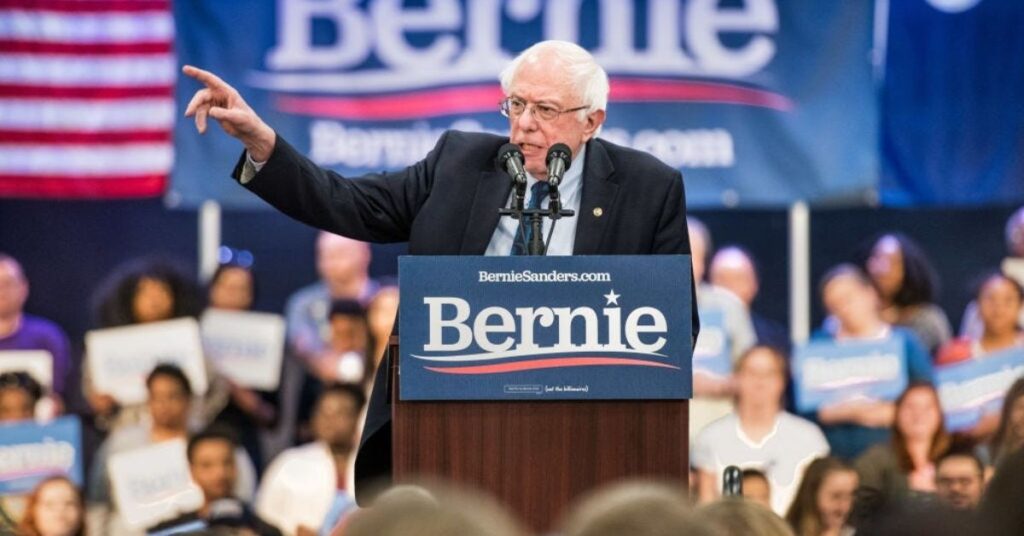
The Bernie Sanders political career timeline is one of the most remarkable in modern American politics a slow burn that took decades before suddenly lighting the whole country on fire. He went from losing race after race in Vermont to drawing the largest crowds of any candidate in the 2016 primary. Understanding how he got there requires starting at the very beginning.
Political Activism
Bernie Sanders’ role in the civil rights movement is not a footnote it’s a foundation. While studying at the University of Chicago, he threw himself into the fight for racial equality. While a student, he was a protest organizer for the Congress of Racial Equality (CORE) and the Student Nonviolent Coordinating Committee (SNCC) during the civil rights movement.
He organized sit-ins, marched in Washington, and got arrested for his beliefs. This wasn’t performative politics. It was personal conviction, and it predates his electoral career by nearly two decades. He was a civil rights activist before he was ever a politician.
Professional History and Early Years in Vermont
After graduating in 1964, Sanders briefly lived on a kibbutz in Israel before moving to Vermont. After graduating, he moved to Vermont where he worked as a carpenter and documentary filmmaker.
He also worked as a freelance writer and made a documentary about Eugene V. Debs, the legendary labor leader, a very on-brand project. Vermont’s culture of independence suited him perfectly, and he quickly became involved in local political organizing.
Liberty Union Campaigns
Sanders entered electoral politics through the Liberty Union Party, a small anti-war socialist organization. He ran as the Liberty Union candidate for governor of Vermont in 1972 and 1976 and as a candidate in the special election for U.S. senator in 1972 and in the general election in 1974. He lost all four races badly.
But he was building name recognition and sharpening his message. After college, Sanders joined the Liberty Union Party, which opposed both capitalism and the Vietnam War. He resigned from the party in 1977 and spent a few years doing documentary work before his political career reignited.
Mayor of Burlington, Vermont (1981–1989)
How Bernie Sanders became mayor of Burlington is one of the great underdog stories in American political history. In 1981, he was elected as mayor of Burlington, the state’s largest city, by a mere 10 votes. Ten votes. Out of tens of thousands cast. He beat the five-term Democratic incumbent Gordon Paquette, and nobody saw it coming.
Campaigns
Sanders ran for mayor with the backing of a grassroots organization called the Progressive Coalition. Nobody gave him a real shot. He had no party machine, minimal funds, and a history of losing elections.
But he connected with working-class neighborhoods that felt ignored by city hall. That 10-vote margin was the crack in the door and he pushed it wide open. He went on to win re-election three more times, serving until 1989.
Administration
As mayor, Bernie’s leadership helped transform Burlington into one of the most exciting and livable small cities in America. Under his administration, the city made major strides in affordable housing, progressive taxation, environmental protection, child care, women’s rights, youth programs and the arts.
One of his signature achievements was the waterfront redevelopment of Burlington’s Lake Champlain shoreline. Sanders did not want Tony Pomerleau to change the industrial lake property owned by the Central Vermont Railway.
He did not want the waterfront to become expensive condominiums, hotels, and offices. Sanders used the slogan “Burlington is not for sale.” He supported a plan that changed the waterfront area into a district with housing, parks, and public space.
As of today, that lakefront is a beloved public space with beaches, bike paths, parks, and a science center. In 1987, U.S. News named Sanders as one of America’s best mayors.
U.S. House of Representatives (1991–2007)
Sanders was elected to the U.S. House of Representatives in 1990, representing Vermont’s at-large congressional district. He became the first independent elected to the House since 1952 and the first socialist since 1948. That’s not a small thing.
Elections
Sanders first ran for the House in 1988 and came close but lost. Two years later, he ran again and won decisively. He defeated Smith by a margin of 56% to 39%. Sanders was the first independent elected to the U.S. House of Representatives since Frazier Reams of Ohio won his second term in 1952.
He served 16 years as Vermont’s sole U.S. congressman winning re-election repeatedly in a state where voters clearly valued results over party labels. In 1991, he and five other House members co-founded the Congressional Progressive Caucus.
Legislation
In the House, Sanders earned the nickname “amendment king” for passing more floor amendments than any other member of Congress. He focused on practical, constituent-level legislation alongside his big-picture progressive goals.
Banking Reform
Sanders was an early and outspoken critic of Wall Street consolidation. He opposed the repeal of the Glass-Steagall Act, which he believed would lead to a dangerous concentration of financial power and when the 2008 financial crisis hit, many economists agreed he had been right.
Cancer Registries
Sanders championed legislation to strengthen the National Program of Cancer Registries, ensuring better tracking and research into cancer rates across the country particularly in underserved communities. This kind of unglamorous, behind-the-scenes work defined much of his House career.
Firearms and Criminal Justice
Sanders’ record on guns is more nuanced than many people realize. He represented a rural state where hunting is part of the culture. He voted against the Brady Bill on multiple occasions and supported some protections for gun manufacturers. Later, he shifted his position and supported stronger background checks.
Opposition to the Patriot Act
Sanders was one of the few members of Congress who consistently opposed the PATRIOT Act, calling it a threat to civil liberties and a dangerous expansion of government surveillance. He remained a principled voice against mass surveillance throughout his House career and carried that position into the Senate.
Opposition to the War in Iraq
This is the vote that made Sanders a progressive hero. When the House voted to authorize the Iraq War in 2002, Sanders voted no. Hillary Clinton voted yes. That single difference became a defining contrast in the 2016 primary, and Sanders was right. He was an anti-war protester long before it was politically safe to be one.
Trade Policy
Sanders opposed virtually every major free trade agreement during his House career — NAFTA, CAFTA, and permanent normalized trade relations with China. He argued these deals shipped American jobs overseas and devastated working-class communities. He became one of the most consistent critics of what he called “disastrous trade deals.”
U.S. Senate (2007–Present)
Bernie Sanders election victories in Vermont for the Senate are a testament to how deeply he connected with his state. He won in 2006, 2012, 2018, and 2024 each time by a comfortable margin. Sanders was reelected in 2012, 2018, and 2024. He chaired the Senate Veterans’ Affairs Committee from 2013 to 2015, the Senate Budget Committee from 2021 to 2023, and the Senate Health, Education, Labor and Pensions Committee from 2023 to 2025.
Elections : 2006
After 16 years in the House, Sanders ran for the Senate seat being vacated by retiring Republican Jim Jeffords. He won handily against Republican businessman Richard Tarrant, who outspent him massively.
He managed to win despite his opponent’s significant advantage in funding: Tarrant spent $7 million of his own personal wealth in this election battle. Sanders became the first non-Republican to win Vermont’s Class 1 Senate seat since 1850.
2012
Sanders ran for re-election in the 2012 election for the U.S. Senate, representing Vermont. Sanders ran unopposed in the Democratic primary on August 28, 2012. He defeated John MacGovern (R) and others in the general election on November 6, 2012. He won with 71% of the vote a massive, across-the-board affirmation of his Senate record.
2018
Sanders won his 2018 re-election with 67% of the vote, defeating Republican H. Brooke Paige. By this point, following his electrifying 2016 presidential campaign, he was one of the most famous politicians in America. Vermont voters returned him to Washington with a ringing endorsement.
2024
Bernie is now serving his fourth term in the U.S. Senate after winning re-election in 2024 with 63 percent of the vote. He defeated Republican challenger Gerald Malloy comfortably, proving that even at 83, he retained the trust of Vermont’s voters.
Legislation : Finance and Monetary Policy
Sanders has been a consistent opponent of what he calls the “billionaire class” having undue influence over the economy. He filibustered the extension of Bush-era tax cuts for the wealthy in 2010 for over eight hours. In 2010, Sanders made the news with his more than eight-hour-long filibuster against the extension of George W. Bush-era tax cuts for the wealthy.
Foreign Policy
Bernie Sanders’ foreign policy views center on diplomacy over military force, opposition to unilateral military action, and a consistent skepticism of U.S. interventionism. During the Gaza war, Sanders introduced several Joint Resolutions of Disapproval to block arms to Israel. All failed, but some Democrats voted for them. In July 2025, 27 senators supported a resolution, a majority of Senate Democrats.
Health Care
Bernie Sanders’ positions on healthcare are perhaps his most defining. He has championed Medicare for All for decades. In mid-December 2009, Sanders successfully added a provision to the Affordable Care Act to fund $11 billion to community health centers, especially those in rural areas. As of 2025, he reintroduced the Medicare for All Act with House allies, maintaining that universal coverage is a human right, not a privilege.
Immigration Policy
Sanders supports comprehensive immigration reform, a pathway to citizenship for undocumented immigrants, and humane border policies. He has opposed mass deportation policies and argued that immigration enforcement should not tear apart families.
Income and Wealth Distribution
This is Sanders’s signature issue. He has proposed a wealth tax on billionaires, steep marginal tax rates on the ultra-wealthy, and major expansions of the social safety net. He frames income inequality as the defining moral and economic challenge of our time — and he’s been saying it since before most people were listening.
Veterans Affairs
As chairman of the Senate Committee on Veterans’ Affairs, Sanders in 2014 passed legislation reforming the VA health care system. Congressional Quarterly said he was able “to bridge Washington’s toxic partisan divide and cut one of the most significant deals in years.” Sanders is proud of this achievement as proof that progressive politics can translate into real, bipartisan legislation.
Supreme Court Nominees
Sanders has consistently opposed nominees he views as hostile to workers’ rights, reproductive rights, and civil liberties. He voted against the confirmations of Justices Neil Gorsuch, Brett Kavanaugh, and Amy Coney Barrett, citing their records on key progressive issues.
Committee Assignments
Throughout his Senate career, Sanders has served on several powerful committees. His chairmanship gave him real legislative leverage to advance his agenda particularly on veterans’ care, the federal budget, and healthcare policy.
119th United States Congress Committee Assignments
As of the 119th Congress, Sanders serves as the Ranking Member of the Senate Health, Education, Labor and Pensions (HELP) Committee. He uses this platform to scrutinize health policy, education funding, and labor rights legislation.
Caucus Memberships
Sanders is the most famous member of the Progressive Caucus in the Senate. He also caucuses with Senate Democrats despite being officially an independent — a pragmatic arrangement that gives him committee assignments and legislative influence.
Approval Ratings
Polling conducted in August 2011 by Public Policy Polling found that Sanders’s approval rating was 67% and his disapproval rating 28%, making him then the third-most popular U.S. senator. In a November 2015 Morning Consult poll, he reached an 83% approval rating among his constituents, making him the most popular U.S. senator. As of 2026, polling by the Morning Consult found Sanders was still the most popular U.S. senator, with 68% approval among Vermont voters.
2016 Presidential Campaign
The Bernie Sanders presidential campaigns 2016 2020 story is the political equivalent of a dark horse running neck and neck with the favorite for most of the race. His 2016 campaign generated significant grassroots enthusiasm and funding from small-dollar donors, helping him win 23 primaries and caucuses. Nobody expected that. Not even Sanders himself.
Campaign Methods
The 2016 presidential bid was built entirely on small-dollar donations, no super PACs, no corporate donors, no Wall Street fundraisers. Sanders raised hundreds of millions of dollars from millions of individual contributors, averaging around $27 per donation.
It was a genuinely new model of political fundraising that proved a progressive candidate could compete financially without selling out to corporate interests.
Presidential Debates
Sanders used the debate stage to introduce ideas like Medicare for All, free public college, and a $15 federal minimum wage to a prime-time national audience. His consistent, unscripted authenticity stood in sharp contrast to more polished opponents.
He didn’t pivot or pander, he just repeated his core message with the conviction of someone who had believed it for 40 years.
Polls and News Coverage
Early in the race, media coverage of Sanders was minimal. As his poll numbers surged, coverage increased dramatically. He consistently drew larger crowds than any other candidate, sometimes tens of thousands of people.
The Bernie Sanders social media influence exploded during this period, making him the most followed politician on social media.
DNC Email Leak
One of the controversies involving Bernie Sanders in 2016 was the leak of Democratic National Committee emails, which revealed that DNC staff had worked to undermine his campaign and favor Hillary Clinton. The revelation enraged Sanders supporters and created lasting tension within the Democratic Party.
Endorsement of Hillary Clinton
Despite the bitterness of the primary, Sanders endorsed Hillary Clinton in July 2016. He argued that defeating Donald Trump was too important to let internal divisions win. His endorsement was genuine but it didn’t fully heal the rift within the party.
Post-Election Activities
After Clinton’s defeat, Sanders wrote Our Revolution: A Future to Believe In, detailing his campaign’s vision. He helped found Our Revolution, an organization designed to keep the political movement alive. He traveled the country, building Bernie Sanders’ endorsements and allies among a new generation of progressive candidates.
Influence on the Democratic Party
The impact of Bernie Sanders on the Democratic Party is enormous and still unfolding. Ideas he championed in 2016 that were considered fringe Medicare for All, a $15 minimum wage, free college became mainstream Democratic positions within a few years.
In recognition of the popularity that he had gained in his presidential bid, Sanders was made the outreach chair on a Democratic Senate leadership team in November 2016.
2020 Presidential Campaign
Sanders entered the 2020 race as the frontrunner. He had the name recognition, the fundraising machine, and the policy platform. But Biden administration dynamics ultimately shifted the race.
Campaign Methods
The 2020 campaign doubled down on the small-dollar grassroots model. Sanders again shunned super PACs and corporate money. He held massive rallies and used social media with extraordinary effectiveness.
Fundraising
Sanders raised more money from individual small-dollar donors than any other 2020 candidate in the early phase of the race. His fundraising model of millions of small contributions rather than a handful of big ones continued to prove its viability.
Polls and News Coverage
After winning the New Hampshire primary and virtually tying in Iowa, Sanders surged to the top of national polls in February 2020. He looked, briefly, like the inevitable nominee.
Forums and Other Appearances
Sanders participated in dozens of town halls, rallies, and media appearances. His consistency never wavered; he gave essentially the same stump speech everywhere he went, with the quiet confidence of someone who knows they’re right.
Presidential Debates
Though he reportedly suffered a heart attack in early October, sparking conversations about the consideration of candidates’ ages, he was able to participate in the debate that occurred later that month. By December, he had released letters from doctors stating that he was in good health and fit to continue.
Suspension of Campaign
Sanders lost the Democratic primaries to Biden, announcing his withdrawal from the race in April 2020. After Super Tuesday’s consolidation around Biden, the math became impossible. He suspended his campaign gracefully and endorsed Biden promptly a contrast with 2016 that was widely noted.
Political Positions
What is democratic socialism Bernie Sanders advocates for? In simple terms, it’s the belief that a democratic government should actively reduce inequality, guarantee universal basic services like healthcare and education, and regulate capitalism to serve people not just shareholders. He often cites Scandinavian countries as models of the Nordic model he’d like to see adapted for America.
Climate Change
Bernie Sanders’ climate change policies are among the most ambitious in U.S. politics. Sanders is a strong advocate for the Green New Deal, which he describes as not just about climate change but also an economic plan to create millions of good-paying jobs, strengthen infrastructure, and invest in frontline and vulnerable communities. He supports a complete ban on fracking, a transition to 100% renewable energy, and massive federal investment in clean energy infrastructure.
Economic Issues
Sanders believes the U.S. economy is rigged to benefit the ultra-wealthy. He advocates for a wealth tax, higher marginal tax rates on the rich, a $17+ federal minimum wage, expanded Social Security, and free public college tuition.
Foreign Policy
Sanders consistently opposes U.S. military interventionism and supports a foreign policy rooted in diplomacy. He was one of the earliest Senate voices against the War in Iraq and has opposed military escalation in the Middle East.
Gun Laws
His position on guns evolved over his career. Representing a rural state, he initially took a more moderate stance on firearms legislation. But by the time of his presidential campaigns, he supported universal background checks, a ban on assault weapons, and ending the gun manufacturer liability shield he had previously supported.
Social Issues
Sanders supports LGBTQ+ rights, reproductive rights, and racial justice. He was backing same-sex civil unions long before it was politically safe. He’s been consistently supportive of women’s rights and has a long record of voting against measures that restrict access to abortion.
First Trump Administration
During Trump’s first term, Sanders became the loudest Senate critic of the administration’s economic policies, particularly the 2017 tax cuts he called a giveaway to billionaires and corporations.
Biden Administration
During the Biden years, Sanders used his chairmanship of the Budget Committee to push for the most ambitious social spending legislation in generations.
He advocated for a $3.5 trillion reconciliation package that ultimately passed in a much smaller form as the Inflation Reduction Act.
Second Trump Administration
Sanders began a “Fight Oligarchy” tour of Midwest districts in February 2025, drawing huge crowds in states that Republicans won but that progressives believe are winnable.
He’s using his Senate platform to oppose healthcare cuts, education funding reductions, and what he calls the consolidation of political power by billionaires.
Party Affiliations
Sanders has always been officially independent. He’s never joined the Democratic Party, despite seeking its presidential nomination twice. He caucuses with Senate Democrats, which gives him committee assignments and legislative influence.
He is the longest-serving independent in U.S. congressional history, but maintains a close relationship with the Democratic Party. This independent identity is central to his brand he’s never wanted to be owned by any party machine.
Physical Appearance of Bernie Sanders
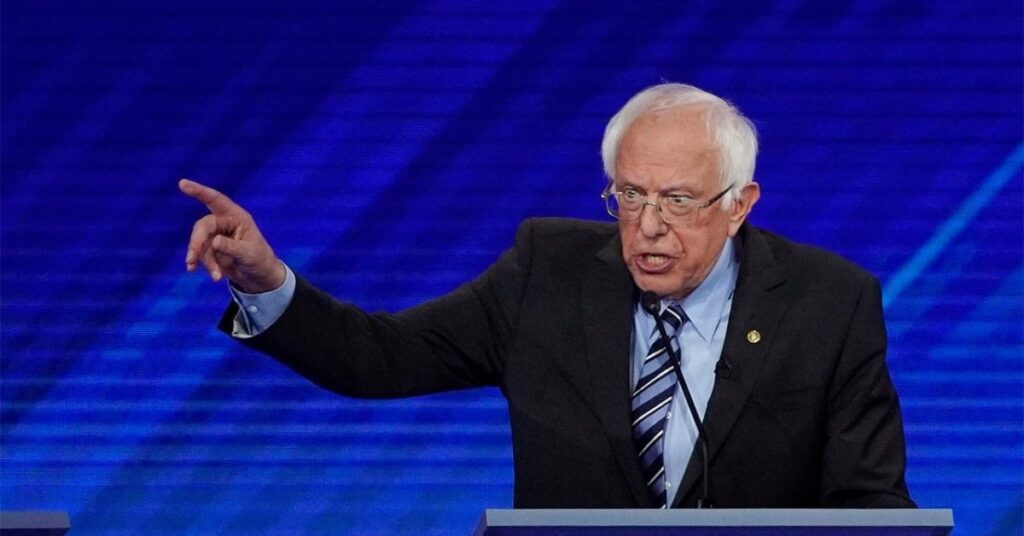
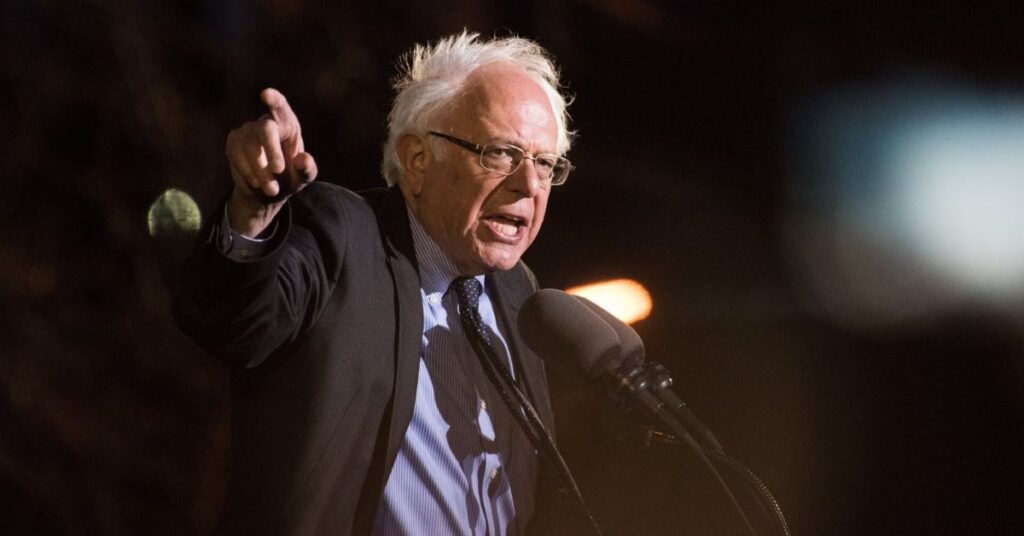
Sanders has become as recognizable by his look as by his politics. The rumpled suits, the wild white hair, the pointed finger, the exasperated expression it’s all part of the package. He doesn’t look like a polished politician. That’s the point.
Bernie Sanders Age
Bernie Sanders was born on September 8, 1941. As of May 2026, he is 84 years old making him one of the oldest sitting U.S. senators. His age has been a topic of political discussion, especially given the broader conversation about older politicians in leadership roles.
Bernie Sanders Weight
Sanders weighs approximately 175–180 lbs (79–82 kg), according to various public health disclosures. He has maintained a relatively healthy weight throughout his career, though his 2019 heart attack raised concerns about his physical fitness.
Bernie Sanders Height
Sanders stands approximately 6 feet tall (183 cm). His upright posture and animated speaking style make him appear commanding on the debate stage more so than his age might suggest.
Bernie Sanders Ethnicity
Sanders is Jewish specifically Ashkenazi Jewish, with roots in Polish Jewish communities. Sanders, the son of Jewish parents of Polish descent, grew up in the Flatbush area of Brooklyn, New York.
His Jewish heritage is something he acknowledges openly, though he doesn’t identify as particularly religious in practice. His 2016 campaign made him the first Jewish American to win a major party presidential primary state, a genuinely historic milestone.
Bernie Sanders Nationality
Bernie Sanders’ nationality is American, born and raised in Brooklyn, New York. He has spent his entire adult life in Vermont and has never held dual citizenship. He is a proud American who nonetheless draws inspiration from the social democratic models of Nordic countries like Denmark, Sweden, and Norway.
Bernie Sanders House
Sanders owns two homes in Vermont. A 2,500-square-foot, 4-bedroom home in Burlington purchased in 2009, now valued at approximately $741,000, and a 4-bedroom cabin on the shores of Lake Champlain purchased in 2016 for $575,000, now estimated at $932,700.
He previously owned a Washington, D.C. townhouse that he sold in 2021. By Washington standards where many members of Congress own million-dollar Georgetown townhouses Sanders’s real estate portfolio is decidedly modest.
Bernie Sanders: Financial Snapshot 2026
Here’s a clean breakdown of Sanders’s financial picture as of 2026:
| Category | Detail |
| Estimated Net Worth | $2M – $3M |
| Annual Senate Salary | $174,000 |
| Burlington Home Value | ~$741,000 |
| Lake Champlain Cabin Value | ~$932,700 |
| D.C. Townhouse | Sold in 2021 for $422,000 |
| Book Royalties (2011–2023) | ~$2.5 million total |
| Primary Investments | TIAA Annuity, Federal Credit Union |
| Stock Market Exposure | Approximately $0 |
Forbes reported that according to his financial disclosures, Sanders made $2.5 million between 2011 and 2023 from book advances and royalties alone.
Bernie Sanders Net Worth 2026
Bernie Sanders’ net worth is estimated to be between $2 million and $3 million as of 2026. For most of his life, he had very little. His financial story changed dramatically after 2016. His net worth increased significantly after his 2016 presidential campaign.
That campaign turned him into a nationally recognized figure, and with that visibility came new opportunities particularly in publishing. His books, including Our Revolution and later Where We Go From Here, sold in large numbers. These were not minor releases; they became bestsellers and generated substantial royalty income.
What’s striking is where that money does NOT come from. Sanders has approximately $0 invested in publicly traded assets. No stock portfolio, no hedge fund returns, no corporate board fees. His wealth is built on salary, real estate, and books. That’s about as clean a wealth profile as you’ll find in the Senate.
Bernie Sanders Net Worth Sources
| Source | Estimated Contribution |
| Senate Salary ($174,000/yr) | Primary ongoing income |
| Book Royalties & Advances | ~$2.5M (2011–2023) |
| Burlington Home | ~$741,000 in real estate equity |
| Lake Champlain Cabin | ~$932,700 in real estate equity |
| D.C. Townhouse (sold 2021) | $422,000 realized |
| Speaking Fees | Occasional; modest amounts |
| Pension/Retirement Accounts | TIAA Annuity; U.S. Senate Credit Union |
| Stock/Equity Investments | ~$0 |
Bernie Sanders Estimated Earnings by Month
| Period | Estimated Monthly Income |
| Senate Salary | ~$14,500/month |
| Book Royalties (peak year) | ~$32,500/month |
| Average Monthly (2026) | ~$15,000–$20,000/month |
Bernie Net Worth in Various Currencies
| Currency | Estimated Net Worth |
| US Dollar (USD) | $2,000,000 – $3,000,000 |
| British Pound (GBP) | £1,580,000 – £2,370,000 |
| Euro (EUR) | €1,840,000 – €2,760,000 |
| Canadian Dollar (CAD) | CA$2,720,000 – CA$4,080,000 |
| Indian Rupee (INR) | ₹16.6 Cr – ₹24.9 Cr |
| Pakistani Rupee (PKR) | PKR 556M – PKR 834M |
| Australian Dollar (AUD) | A$3,060,000 – A$4,590,000 |
Note: Figures are approximate and based on exchange rates as of early 2026.
Comparing Bernie Sanders Net Worth to Other Peers
| Politician | Estimated Net Worth (2026) |
| Bernie Sanders | $2M – $3M |
| Elizabeth Warren | ~$12M |
| Alexandria Ocasio-Cortez | ~$1M |
| Joe Biden | ~$10M |
| Donald Trump | ~$5B+ |
| Mitch McConnell | ~$34M |
| Nancy Pelosi | ~$120M+ |
Sanders is, by a wide margin, one of the least wealthy senior senators, a fact that aligns with his message about economic inequality in a way that few politicians can genuinely claim.
Bernie Sanders Awards and Achievements
| Award / Achievement | Year | Description |
| Named one of America’s Best Mayors | 1987 | U.S. News & World Report |
| Co-founder, Progressive Caucus | 1991 | One of six founding members in the House |
| “Amendment King” in the House | 1991–2007 | Passed more floor amendments than any other member |
| NAACP 100% Voting Score | Multiple years | Perfect score on civil rights legislation |
| NHLA 100% Voting Score | Multiple years | Perfect score on Hispanic leadership agenda |
| Most Popular U.S. Senator | 2015, 2016, 2026 | Morning Consult polling, Vermont |
| VA Reform Legislation Passed | 2014 | Bipartisan veterans’ healthcare reform |
| Historic 8.5-Hour Filibuster | 2010 | Against Bush-era tax cut extension |
| First Jewish candidate to win major party primary states | 2016 | Historic milestone in U.S. political history |
| Eugene V. Debs Award | October 2025 | Awarded by the Eugene V. Debs Foundation |
Health Problems
Sanders had a notable health scare in 2019. He reportedly suffered a heart attack in early October (2019), sparking conversations about the consideration of candidates’ ages, but he was able to participate in the debate that occurred later that month.
By December, he had released letters from doctors stating that he was in good health and fit to continue. The heart attack involved two arterial blockages and required stent placement. He recovered quickly and returned to the campaign trail within weeks.
Beyond that episode, Sanders has maintained a relatively healthy profile for a man in his eighties. He walks briskly, speaks with full energy, and shows no visible signs of cognitive decline.
Legal Issues
Sanders has no significant criminal record or major legal findings against him. One controversy emerged involving his wife Jane. In 2018, the FBI reportedly investigated allegations related to Jane O’Meara Sanders’s financial management during her tenure as president of Burlington College.
The investigation was reportedly closed without charges. Sanders himself has never faced criminal charges, civil judgments, or serious legal sanctions of any kind throughout his career.
Bernie Sanders Political Views
Bernie Sanders’ political views are rooted in democratic socialism, the belief that political democracy must be paired with economic democracy. He doesn’t think capitalism should be abolished, but he believes it must be tamed, regulated, and redirected toward serving ordinary people.
He advocates for a Nordic model-inspired system with universal healthcare, free public education, strong labor unions, and aggressive taxation of wealth. His positions have remained remarkably consistent over five decades which is either admirable ideological conviction or stubborn rigidity, depending on who you ask.
Bernie Sanders Social Media Accounts
| Platform | Handle | Approximate Followers (2026) |
| X (Twitter) | Click me | 14.8M |
| Click me | 8.8M | |
| Click me | 6.6M | |
| YouTube | Click me | 1.3M |
| TikTok | Click me | 3.7M |
Sanders’s social media team is one of the most effective in politics, a consistent stream of sharp, direct content that cuts through algorithmic noise with a clarity most political accounts never achieve.
Bernie Sanders Controversies
No political career spanning five decades is without controversy. Sanders has had several.
DNC Email Scandal (2016)
The leak of DNC emails revealed that party officials had actively worked to undermine Sanders’s primary campaign, creating a perception of a rigged process. Sanders supporters were furious. The controversy damaged Democratic unity heading into the general election and remains a sore point for many progressives.
“Three Houses” Narrative
When it emerged that Sanders owned three properties (before selling the D.C. townhouse), critics particularly during the 2016 campaign pointed out the apparent irony of a democratic socialist owning multiple homes.
Sanders responded that his Lake Champlain cabin was purchased with money from his wife’s family, and that owning property is hardly the kind of wealth he’s been criticizing.
Burlington College Controversy
His wife Jane faced scrutiny over her management of Burlington College’s finances, including a land deal allegedly based on inflated donor pledges. The college ultimately closed in 2016. No charges were filed, but the episode attracted criticism from political opponents.
Campaign Staff Wages
In an almost comedically ironic twist, Sanders’s 2016 campaign faced complaints from field organizers who said they were working 60-hour weeks and earning wages that came out to less than $15/hour, the very minimum wage Sanders champions. The campaign responded by reducing hours to address the issue.
Endorsement Timing (2016 vs. 2020)
In 2016, Sanders waited until late July to formally endorse Clinton months after it was clear she had won. Some Democrats blamed this delay for depressing turnout among his supporters. In 2020, he endorsed Biden much more quickly, learning from that experience.
What’s Next for Bernie Sanders?
At 84, Sanders shows no signs of retirement. The Associated Press proclaimed that Sanders has emerged as one of the leaders of a revived “anti-Trump resistance,” touring the country and drawing huge crowds who come to hear him talk about democracy, education, and healthcare.
His current Senate term runs through 2031. Whether he’ll run for re-election at age 89 is an open question but few would bet against him doing exactly that. His future political plans appear to center on using the Senate platform to fight the rollback of healthcare access, defend workers’ rights, and build progressive power for the 2026 midterms.
Legacy
Comparison of Bernie Sanders to other progressives consistently places him in a category of his own, the godfather of the modern American progressive movement. He dragged policy debates leftward on healthcare, education, income inequality, and climate. Ideas dismissed as radical fantasies in 2015 are now mainstream Democratic platforms.
He is the longest-serving independent in U.S. congressional history. Whatever you think of his politics, his impact on the Democratic Party and on American political discourse is undeniable. His books and writings, including Our Revolution, Where We Go From Here, and It’s OK to Be Angry About Capitalism, introduced his ideas to millions of readers worldwide.
Fun Facts About Bernie Sanders
- Sanders won his first mayoral election by just 10 votes.
- He was arrested at age 21 for civil rights activism in Chicago.
- He attended the 1963 March on Washington where MLK gave the “I Have a Dream” speech.
- He is the longest-serving independent in U.S. congressional history.
- His mittens at Biden’s 2021 inauguration spawned an internet meme that raised thousands of dollars for Vermont charities.
- He made a documentary about Eugene V. Debs early in his career.
- He was known as the “amendment king” of the House of Representatives.
- Sanders flew coach throughout his presidential campaign — even as a frontrunner.
- He is a skilled carpenter and has built furniture for his own home.
- He launched a weekly Facebook show called “The Bernie Sanders Show” in 2017, making him one of the first senators to use the platform this way.
Conclusion
Bernie Sander net worth of $2–3 million tells a story that’s more interesting than the number itself. He didn’t arrive in politics with family money. He didn’t leverage public office for corporate board seats or speaking circuits.
His wealth came from a lifetime of public service salary, two bestselling books, and modest Vermont real estate. For a man who has spent 40 years warning about the concentration of wealth in America, his own financial profile is strikingly consistent with his message.
Senator Sanders remains one of the most consequential and fascinating figures in modern American politics. Whether you see him as a visionary who dragged the country toward greater fairness or a stubborn idealist who never learned to compromise, his impact is beyond dispute.
The Vermont senator who once won a mayoral race by 10 votes now shapes national policy conversations. The Independent senator who was mocked for talking about Medicare for All now watches as it commands majority support in the House Democratic Caucus. Not bad for a Brooklyn kid whose dad sold paint. The political revolution, it turns out, isn’t just a slogan it’s a work in progress.
