

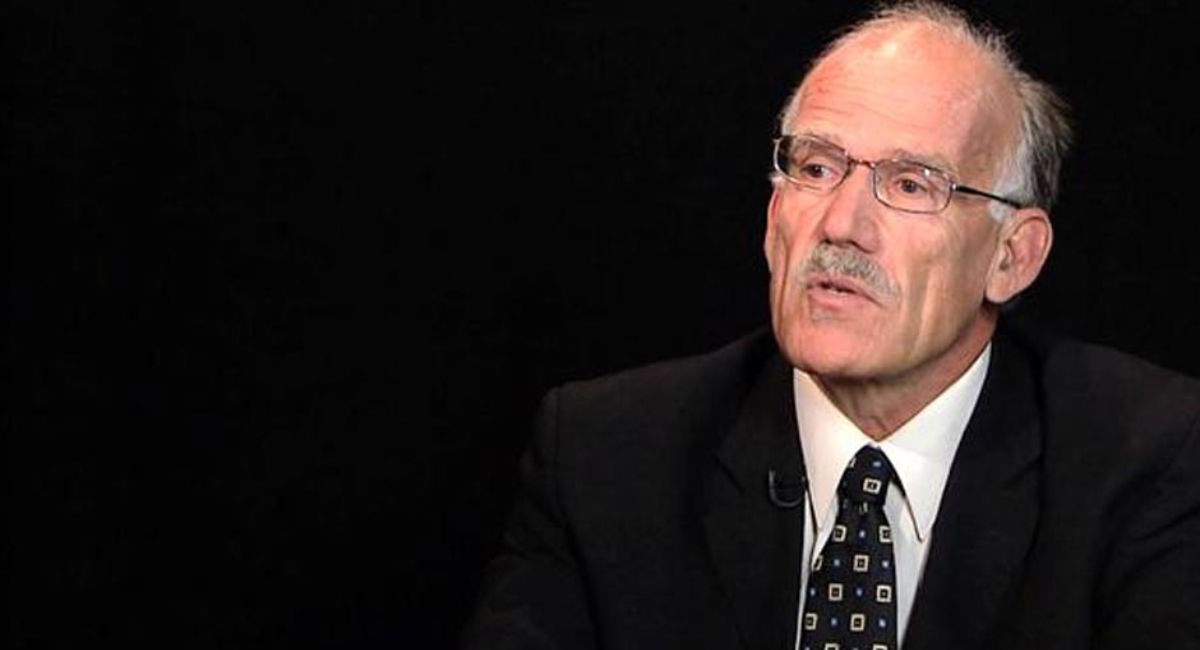
Victor Davis Hanson is a renowned American classicist, military historian, and political commentator whose decades of scholarship and media influence have made him a prominent public intellectual.
As interest grows around his career, background, and achievements, many readers also search for insights into Victor Davis Hanson Net Worth and how his long academic tenure, bestselling books, and work with major institutions contribute to his financial standing.
Hanson’s influence spans classical studies, modern political commentary, and national security analysis, making him a unique figure in contemporary discourse. Understanding his life, work, and public impact offers valuable context for those exploring his legacy and overall professional success.
Victor Davis Hanson Biography
Victor Davis Hanson entered the world on September 5, 1953, in Fowler, California. His Victor Davis Hanson age now stands at 72 years, marking over seven decades of witnessing American transformation.
Born into a fifth-generation farming family, young Victor grew up surrounded by vineyards and orchards in the San Joaquin Valley. The Central Valley farm owner lifestyle shaped his worldview before he ever cracked open a Greek text. His Swedish and Welsh ancestry connected him to immigrant stories of building something from California’s fertile soil.
The American historian carries a poignant connection to military history through his very name. His father’s cousin, also named Victor Davis Hanson, died at the Battle of Okinawa during World War II.
This namesake warrior’s death planted seeds of interest in warfare’s human cost. Today, Hanson works as the Martin and Illie Anderson Senior Fellow at Stanford’s Hoover Institution.
President George W. Bush awarded him the National Humanities Medal in 2007, recognizing contributions that blend classical studies with contemporary analysis. His biography reads like chapters from different books somehow bound together.
Who is Victor Davis Hanson?
Victor Davis Hanson defies simple categorization in America’s intellectual landscape. The military historian analyzes modern conflicts through lenses ground from ancient Greek battles.
His expertise in classical warfare provides unconventional perspectives on Iraq, Afghanistan, and contemporary geopolitics. As a conservative commentator, he reaches millions through syndicated columns, Fox News appearances, and bestselling books.
Yet he simultaneously maintains identity as a working farmer, still tending ancestral land his family has cultivated since the 1870s.This Hoover Institution fellow occupies a rare space where academic credibility meets populist appeal.
He writes for the Wall Street Journal and National Review while personally operating vineyard equipment. His journey from registered Democrat to independent conservative mirrors many Americans’ political evolution.
The political commentator defended George W. Bush’s Iraq War with classical analogies, then later championed Donald Trump’s presidency in “The Case for Trump.” Critics call him neoconservative; supporters see an unflinching truth-teller. His identity refuses neat boxes that typically contain public intellectuals.
Victor Davis Hanson Early Life
Young Victor grew up in Selma, California, where agriculture wasn’t romantic—it was survival. The San Joaquin Valley’s scorching summers and backbreaking labor defined childhood for this future scholar.
His family had worked the same land since the 1870s, creating five generations of rootedness rare in modern America. Swedish and Welsh immigrants built the Hanson farming legacy through sweat equity and stubborn persistence. Victor learned Greek conjugations while driving tractors, an unusual combination that foreshadowed his unique career.
The Central Valley farm owner lifestyle taught lessons no classroom could replicate. He understood crop failures, water rights battles, and economic pressures crushing small farmers.
These experiences later informed his memoirs “Fields Without Dreams” and “The Land Was Everything.” His Victor Davis Hanson education began not in universities but in understanding why his namesake cousin died at Okinawa.
Rural California’s decline became personal, not abstract policy discussion. The vanishing agrarian middle class he witnessed sparked both nostalgia and anger that fuels his writing today.
Victor Davis Hanson Personal Life
At 72, Victor Davis Hanson still resides on his ancestral farm outside Selma. The property represents more than real estate—its living history spanning 150 years. His daily routine blends writing classical history with agricultural responsibilities that ground him physically.
Unlike many intellectuals who theorize from ivory towers, he experiences the economic struggles he analyzes. The American historian genuinely understands Middle America because he never left it, even while his mind roamed ancient Athens and Sparta.
Personal tragedy shaped his worldview as profoundly as any book. His youngest daughter Susannah died from leukemia in 2014, a loss that deepened his writing on warfare’s human cost.
Cancer claimed his mother, sister-in-law, and maternal aunt, creating a family history of medical devastation. These experiences inform his gravitas when discussing death in combat or civilization’s fragility.
The conservative commentator evolved from registered Democrat to independent, voting for Bush in 2000 and 2004 before supporting Trump. His personal journey mirrors broader conservative movement trends over two decades.
Victor Davis Hanson Family
The Hanson family story reads like California history compressed into bloodlines. Five consecutive generations lived in the same house on their Central Valley property. Swedish and Welsh immigrants established roots that grew deeper with each passing decade.
His family embodied America’s agricultural backbone before corporate farming devoured family operations. The Central Valley farm owner tradition passed from great-great-grandfather to great-grandfather to grandfather to father to Victor himself.
The Victor Davis Hanson family endured crushing losses that tested any clan’s resilience. Susannah Merry Hanson, his youngest daughter, fought leukemia before dying on November 17, 2014.
She left behind grieving parents and siblings devastated by losing someone so young. Cancer’s cruel pattern repeated throughout the family; his mother, sister-in-law, and maternal aunt all succumbed to the disease.
These repeated tragedies inform his writing about war’s randomness and civilization’s fragility. His three children, two daughters and one son, grew up straddling worlds between academic prestige and agricultural reality.
| Family Member | Relationship | Notable Information |
| Cara Webb Hanson | First Wife | Married 1977-2005, mother of three children |
| Jennifer Heyne | Second Wife | Married 2013, supported through daughter’s death |
| Susannah Hanson | Daughter | Died 2014 from leukemia |
| Two Other Children | Son and Daughter | Names kept private |
| Mother | Parent | Died from cancer |
| Sister-in-law | Extended Family | Died from cancer |
| Maternal Aunt | Extended Family | Died from cancer |
Victor Davis Hanson Wife
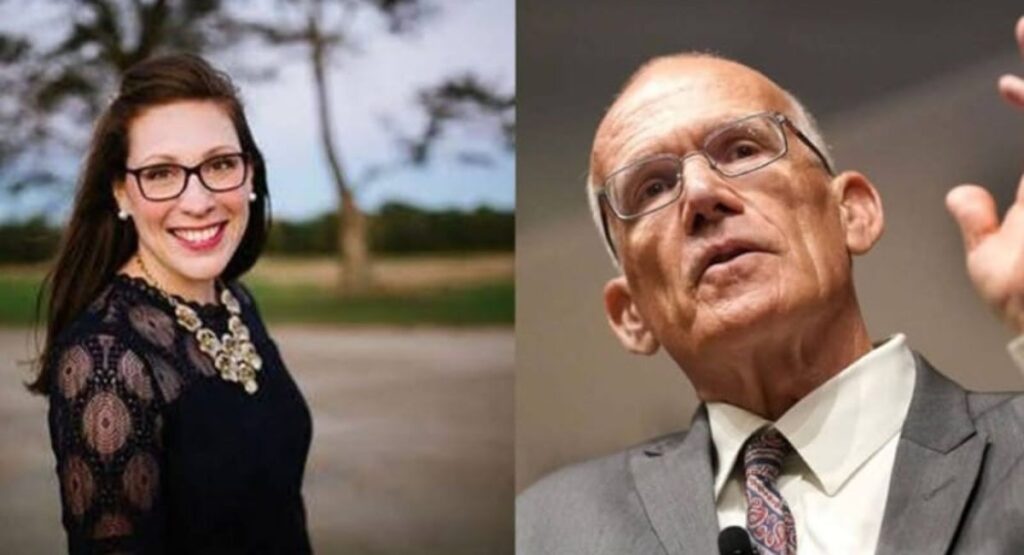
Victor Davis Hanson wife Cara Webb married him on June 18, 1977, beginning a 28-year partnership. They raised three children together while Victor built his academic career from CSU Fresno professor to national figure.
Cara Webb Hanson supported his transition from full-time farming to teaching, then to public intellectual prominence. Their marriage weathered the pressures of raising kids, managing a farm, and his increasing political visibility. However, the couple divorced in 2005 after nearly three decades together.
Eight years passed before Victor remarried. In November 2013, he wed Jennifer Heyne, starting a second chapter in his personal life. Jennifer became his partner just before the devastating loss of his daughter Susannah in 2014.
She provided crucial support during that unimaginable grief. The Victor Davis Hanson wife role now belongs to Jennifer, who maintains privacy despite her husband’s public profile.
Victor Davis Hanson Wife Photo
Finding a Victor Davis Hanson wife photo proves challenging because the family guards privacy fiercely. Jennifer Heyne rarely appears in public photographs alongside her husband. Occasional images surface from academic events or speaking engagements, but they’re exceptions.
This scarcity reflects intentional boundaries between his public intellectual work and private family life. The conservative commentator separates professional controversy from personal sanctuary.
What Happened to Victor Davis Hanson Daughter?
Susannah Merry Hanson received a devastating leukemia diagnosis that began her family’s nightmare. The youngest of Victor’s three children, she fought the cancer with treatments that offer hope but guarantee nothing.
Her battle stretched through 2014 while her father continued writing and speaking publicly. The American historian faced personal catastrophe while maintaining professional commitments, a torturous balancing act.
On November 17, 2014, Susannah lost her fight against leukemia. Her death shattered the Hanson family in ways outsiders can barely comprehend. She left behind parents, siblings, and extended family grappling with grief’s tsunami.
The loss occurred just one year after Victor remarried, meaning Jennifer witnessed this tragedy early in their marriage. Friends noted how the military historian who wrote extensively about war’s casualties now experienced death’s cruelty firsthand.
His subsequent writing carried heavier emotional weight, informed by personal devastation rather than merely scholarly analysis.The tragedy connected to broader family cancer patterns. His mother had already died from cancer, as had his sister-in-law and maternal aunt.
This recurring nightmare made Susannah’s diagnosis particularly terrifying. Her death represented the fourth family member cancer claimed, creating generational trauma that haunts survivors.
Victor Davis Hanson’s family grief became part of his public identity, though he rarely exploits it for sympathy. Understanding this loss helps contextualize the gravitas in his later works about civilization’s fragility and life’s randomness.
Victor Davis Hanson Twin Brother
Victor Davis Hanson does not have a twin brother despite internet rumors suggesting otherwise. This misconception circulates online without factual foundation.
He has siblings, including at least one brother involved in the family farming operation, but no twin exists.
Victor Davis Hanson Education
Victor Davis Hanson education began at the University of California, Santa Cruz, where he earned a B.A. in Classics in 1975. He also received general Cowell College honors, demonstrating academic excellence beyond his major.
Santa Cruz provided an unconventional environment for studying ancient Greece, a California campus far removed from Mediterranean shores. Yet the program’s quality prepared him for elite graduate work. His undergraduate years planted seeds for connecting agrarian life with classical studies.
After graduating, Hanson spent time at the American School of Classical Studies in Athens from 1977-1978. This fellowship allowed him to walk ancient battlefields he’d only read about in texts.
He studied archaeological sites and deepened language skills in Greece itself. Then Stanford University accepted him for doctoral studies, where he completed his Ph.D. in Classics in 1980.
His dissertation examined warfare and agriculture in classical Greece, foreshadowing career-long themes. The California State University professor built credentials at elite institutions before returning to Central Valley roots.
| Degree | Institution | Year | Notable Details |
| B.A. in Classics | UC Santa Cruz | 1975 | Cowell College honors |
| Fellowship | American School Classical Studies, Athens | 1977-1978 | Studied in Greece |
| Ph.D. in Classics | Stanford University | 1980 | Dissertation on warfare and agriculture |
Academic Career
After completing his doctorate in 1980, Victor Davis Hanson didn’t immediately enter academia. Instead, he returned to his family farm as full-time orchard and vineyard grower from 1980-1984.
This four-year agricultural interlude distinguished him from typical academic career paths. He picked grapes and pruned trees while most peers scrambled for tenure-track positions. The Central Valley farm owner lived the agrarian life he’d later write about with authority.
In 1984, Hanson joined nearby California State University, Fresno, to launch their classical studies program. The California State University professor quickly gained a reputation for exceptional teaching.
The American Philological Association awarded him their Excellence in Teaching Award in 1991, recognizing the nation’s top undergraduate Greek and Latin instructors. His ability to make ancient warfare relevant to California farm kids demonstrated pedagogical gifts. Students remembered his classes decades later, rare for general education requirements.
His academic career included prestigious temporary positions alongside his CSU Fresno base. He served as visiting professor at Stanford University from 1991-1992, returning to his doctoral institution.
A National Endowment for the Humanities fellowship brought him to Stanford’s Center for Advanced Studies in the Behavioral Sciences in 1992-1993. The Alexander Onassis Fellowship came in 2001, followed by the Nimitz Fellowship at UC Berkeley in 2006.
He held the visiting Shifrin Chair of Military History at the U.S. Naval Academy from 2002-2003, teaching future officers.In 2004, the military historian took early retirement from Cal State Fresno. This strategic decision let him focus on political writing and popular history without teaching obligations.
The Hoover Institution appointed him Senior Fellow, providing institutional home for his research. He became chairman and principal investigator of their Working Group on the Role of Military History in Contemporary Conflict.
From 2009-2015, he served as William Simon Visiting Professor at Pepperdine University’s School of Public Policy. Pepperdine awarded him an Honorary Doctorate of Laws in 2015, recognizing his contributions.
Carnage and Culture
Carnage and Culture, published by Doubleday in 2001, became the Carnage and Culture author‘s breakthrough to mainstream audiences. The book appeared in Britain and Commonwealth countries as “Why the West Has Won,” making its thesis explicit.
Victor Davis Hanson argued that Western military dominance from ancient Greeks forward stemmed from cultural factors, not racial or environmental advantages. Consensual government, self-critique, secular rationalism, religious tolerance, and individualism created superior warriors and strategies.
His cultural exception argument rejected racial explanations that had tainted earlier scholarship. He also disagreed with Jared Diamond’s environmental determinism in “Guns, Germs, and Steel.”
Instead, Hanson emphasized how free markets and individual freedom produced military innovation. The classics historian traced this pattern from Greek hoplites through Roman legions to modern American forces.
His September 2001 publication date, just days before 9/11, gave the book unexpected contemporary relevance.Critics challenged his thesis vigorously. Military officer Robert L. Bateman argued in 2007 that the Second Punic War contradicted Hanson’s claims about Western armies seeking decisive annihilation battles.
Bateman noted how Romans attempting to destroy Carthaginians instead got annihilated at Cannae. Only the Fabian strategy of avoiding battle ultimately defeated Hannibal.
Hanson responded that Romans initially sought decisive battles but adapted after defeats, then later destroyed Hannibal decisively once rebuilt. He noted Carthaginians had adopted Greek warfare methods, making Hannibal himself “Western” in approach.
United States Education and Classical Studies
Victor Davis Hanson co-authored “Who Killed Homer? The Demise of Classical Education and the Recovery of Greek Wisdom” with John Heath in 1998. The Victor Davis Hanson books catalog includes this passionate defense of traditional classics against postmodern deconstruction.
The authors lamented how American universities abandoned Greek and Roman studies for gender, race, and class critiques. They argued that understanding Western culture requires knowledge of its classical foundations, making the decline dangerous.
Political scientist Francis Fukuyama praised the book in Foreign Affairs, noting how Western tradition’s great thinkers from Hobbes to Weber were steeped in Greek thought. He agreed that postmodernist and pragmatic attacks on classics threatened cultural literacy.
The authors defended traditionalist approaches against those questioning classics’ value in computer-driven society. Their argument resonated with conservatives concerned about universities abandoning Western civilization courses.
However, classicists Victoria Cech and Joy Connolly identified significant problems. Cech argued Hanson and Heath compared modern academia not to actual ancient cultures but to myths about them.
She noted they oversimplified complex issues like individual freedom Athens executed Socrates for inconvenient doctrines just as Jerusalem crucified Jesus. Connolly, a Classics professor at NYU, criticized their dismissal of feminist scholarship.
The book claimed women never enjoyed equal rights historically, so why waste time studying Greek sexism’s exact nature? This position alienated many scholars who found the work intellectually shallow despite passionate prose.
Physical Appearance of Victor Davis Hanson
| Feature | Details |
| Age | 72 years (born September 5, 1953) |
| Height | Reported as 5 ft 8 in to 5 ft 10 in |
| Weight | Reported around 71 kg |
| Hair Color | Light brown / greying |
| Eye Color | Brown |
| Build | Average |
| Sun Sign | Virgo |
Victor Davis Hanson Age
He is 72 years old, born on September 5, 1953.
Victor Davis Hanson Height and Weight
His height is reported between 5’8″ and 5’10”, and weight around 71 kg.
Political Views
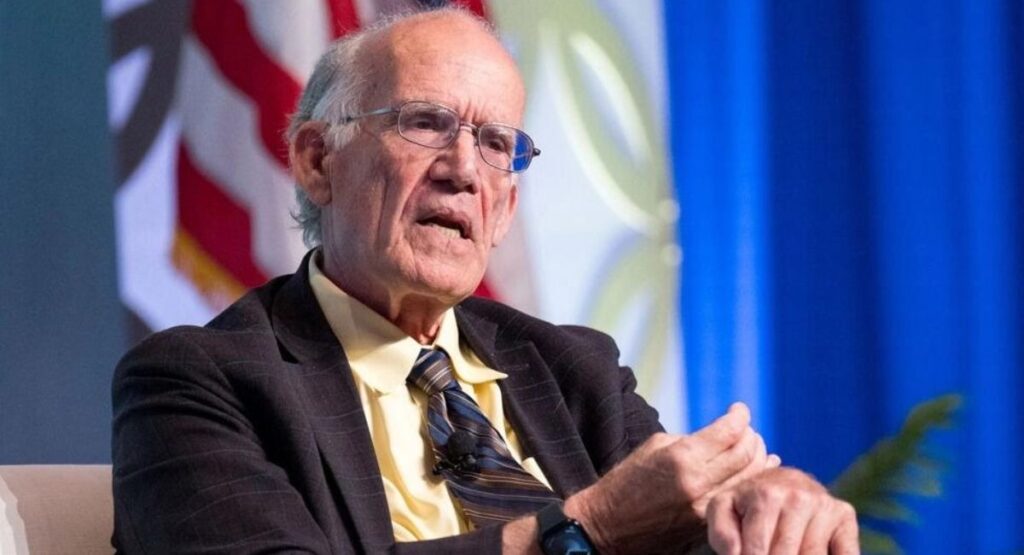
Victor Davis Hanson once registered as a Democrat before evolving into conservative commentator. He voted for George W. Bush in both 2000 and 2004 elections, supporting Iraq War policies enthusiastically.
As of 2020, he identified as registered independent, though his commentary remains consistently conservative. His political commentator career accelerated post-9/11 when he defended Bush administration foreign policy using classical analogies.
The American historian vocally supported Defense Secretary Donald Rumsfeld, describing him as “a rare sort of secretary of the caliber of George Marshall.” He called Rumsfeld a “proud and honest-speaking visionary” whose “hard work and insight are bringing us ever closer to victory” in Iraq.
These predictions aged poorly as Iraq descended into sectarian chaos. However, Hanson never wavered in his conviction that removing Saddam Hussein served Western civilization’s interests.
His 2019 book “The Case for Trump” cemented his role as Trump defender using historical frameworks. Trump praised the work, which defends his insults as “uncouth authenticity” and praises his “uncanny ability to troll and create hysteria among his media and political critics.”
The conservative commentator argued Trump’s norm-breaking served necessary purposes in America’s cultural conflicts. His 2002 collection “An Autumn of War” called for going to war “hard, long, without guilt, apology or respite until our enemies are no more.” This maximalist approach defines his strategic thinking across conflicts.
Race Relations
In July 2013, Attorney General Eric Holder gave a speech mentioning “The Talk” that Black parents give children about interacting with police. Victor Davis Hanson responded with a National Review column titled “Facing Facts about Race” offering his own version of “The Talk.”
He wrote about warning his children to be careful of young Black men when venturing into inner cities. The political commentator argued young Black men statistically commit more violent crimes, making police focus understandable and his warnings prudent.
Ta-Nehisi Coates of The Atlantic called this “stupid advice,” comparing it to only employing Asian-Americans for taxes because they score higher on math SATs. Coates argued that in any other context, people would recognize such racial profiling as both insensitive and mentally deficient.
Arthur Stern labeled the column “inflammatory” and noted Hanson never cited the crime statistics he claimed justified his position. Presenting controversial opinions as undeniable facts without exhaustive proof constituted racism, Stern argued.
Journalist Kelefa Sanneh wrote in The New Yorker that Hanson’s framing was strange, as if fear of violent crime were mainly a “white or Asian” problem about which African-Americans were uninformed.
Sanneh noted that Black parents already give children more detailed and nuanced versions of safety talks, sharing Hanson’s earnest hope that right words might keep trouble away.
The American historian responded by accusing Sanneh of “McCarthyite character assassination” and “infantile, if not racialist, logic.” The exchange revealed deep divides in how Americans discuss race, crime, and profiling.
Obama Criticism
Victor Davis Hanson emerged as fierce critic of President Barack Obama throughout his presidency. He criticized the Obama administration for what he perceived as “appeasing” Iran through nuclear negotiations.
He also accused Obama of weakness toward Russia that emboldened Vladimir Putin. The conservative commentator blamed Obama personally for the outbreak of war in Ukraine in 2014, arguing failed deterrence invited Russian aggression.
In May 2016, Hanson wrote that Obama failed to maintain credible threat of deterrence and predicted “the next few months may prove the most dangerous since World War II.”
This apocalyptic prediction didn’t materialize, but it reflected his conviction that Obama’s foreign policy destabilized global order. His critique fit broader conservative narratives about Democratic weakness on national security. The military historian used classical examples of failed deterrence to argue Obama repeated ancient mistakes with modern consequences.
Victor Davis Hanson Books
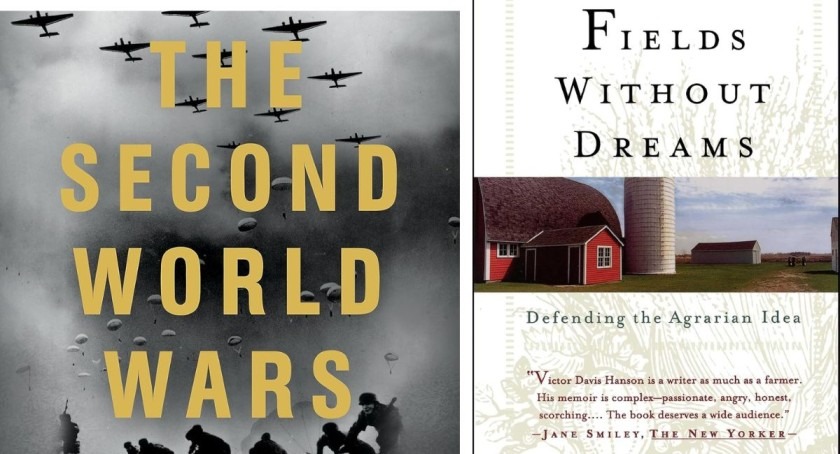
The Victor Davis Hanson books collection spans over four decades of prolific writing. His 1983 work “Warfare and Agriculture in Classical Greece,” published by University of California Press, began as his PhD dissertation.
It argued that Greek warfare couldn’t be understood separately from agrarian life and challenged assumptions about agriculture’s devastation during classical wars.
Yale lecturer Donald Kagan called it “the most important work in Greek history in my lifetime,” with significance “hard to exaggerate.”
“The Western Way of War,” published by Alfred A. Knopf in 1989, explored combatants’ experiences in ancient Greek battle. It detailed Hellenic foundations that shaped later Western military practice.
“The Other Greeks” from Free Press in 1995 argued that a unique middling agrarian class explained Greek city-states’ ascendance and values of consensual government, private property sanctity, civic militarism, and individualism.
These early works established the classics historian as scholar connecting ancient patterns with modern implications.His memoirs “Fields Without Dreams” (1996) and “The Land Was Everything” (2000) lamented family farming’s decline and rural communities’ disappearance.
These personal works drew from his Central Valley farm owner experiences, giving readers intimate portraits of agricultural California’s death throes. “The Soul of Battle” (1999) traced careers of Epaminondas, William Tecumseh Sherman, and George S. Patton to argue democratic warfare’s strengths shine in short, intense, spirited marches but bog down during long occupations.
“Mexifornia” (2003) provided a controversial memoir about growing up in rural California and immigration from Mexico. Victor Davis Hanson predicted illegal immigration would reach crisis proportions unless legal, measured, diverse immigration was restored with traditional melting-pot values.
“Ripples of Battle” (2003) chronicled how battle affects combatants’ later literary and artistic work, with influence rippling for generations. “A War Like No Other” (2005) offered alternative history of the Peloponnesian War arranged by fighting methods rather than chronology.
“The Savior Generals” (2013) examined Themistocles, Belisarius, Sherman, Ridgway, and Petraeus, arguing rare leadership qualities emerge during hopeless predicaments. “The Second World Wars” (2017) analyzed how the first global conflict was fought and won. “The Dying Citizen” (2021) examined how progressive elites, tribalism, and globalization destroy America’s founding ideals. His novel “The End of Sparta” (2011) told the fictional story of Thespian farmers joining Epaminondas’s march to destroy Spartan hegemony.
Victor Davis Hanson Latest Book
Victor Davis Hanson latest book, “The End of Everything: How Wars Descend into Annihilation,” hit shelves in May 2024 from Basic Books. The work became an instant New York Times bestseller, demonstrating his continued appeal among conservative readers.
The military historian examined how societies throughout history chose to completely destroy their enemies rather than seek negotiated settlements or limited objectives.The book focuses on four devastating case studies: Thebes, Carthage, Constantinople, and Tenochtitlan.
Each civilization faced total annihilation through warfare that destroyed not just armies but entire cultures. Victor Davis Hanson argues that despite millennia of technological and social change, human nature’s violent capacity remains constant.
Modern societies, he warns, are not immune from wars of extinction despite believing themselves civilized beyond such barbarism.The Carnage and Culture author draws disturbing parallels to contemporary geopolitical threats. He warns about nuclear proliferation, rising authoritarianism, and declining Western military readiness.
The book arrived during escalating tensions between great powers, making its warnings about annihilation warfare particularly chilling. Critics noted his tendency toward apocalyptic rhetoric, but fans appreciated his unflinching examination of civilization’s fragility.
Works
| Major Works | Publication Year | Publisher | Notable Recognition |
| Warfare and Agriculture | 1983 | UC Press | Called “most important work in Greek history” |
| The Western Way of War | 1989 | Alfred A. Knopf | Foundational military history text |
| Who Killed Homer? | 1998 | Encounter Books | Sparked classics education debate |
| Carnage and Culture | 2001 | Doubleday | Post-9/11 bestseller |
| Mexifornia | 2003 | Encounter Books | Immigration controversy |
| The Case for Trump | 2019 | Basic Books | Praised by President Trump |
| The Dying Citizen | 2021 | Basic Books | Conservative bestseller |
| The End of Everything | 2024 | Basic Books | NY Times bestseller |
Victor Davis Hanson Net Worth
Victor Davis Hanson net worth is estimated between $4-6 million as of 2025, accumulated through diverse income streams spanning decades. Unlike academics dependent solely on university salaries, he built wealth through strategic diversification.
Book royalties from over 20 published works provide substantial recurring income, especially when titles become bestsellers. Speaking fees reportedly range from $20,000-50,000 per engagement, with his calendar packed throughout the year.
The California State University professor earned pension benefits from his 1984-2004 tenure at CSU Fresno. Early retirement at 50 allowed him to focus on more lucrative writing and speaking while collecting pension payments.
His professor emeritus status maintains university connections without teaching obligations. Visiting professorships at Pepperdine and elsewhere supplemented income while boosting credentials. Media appearances on Fox News and other outlets generate additional compensation beyond exposure benefits.
His Central Valley farm owner status adds real estate wealth often overlooked in net worth calculations. Agricultural land in California’s Central Valley has appreciated significantly over 150 years of family ownership. The property likely values in millions independent of farming income.
Vineyard and orchard operations generate revenue, though California’s agricultural economics have squeezed small farmers he writes about. Water rights alone carry substantial value in drought-prone regions.
His Victor Davis Hanson net worth reflects successful monetization of expertise across multiple platforms.Syndicated column deals with Tribune Content Agency since 2004 provide steady income reaching hundreds of newspapers.
Board positions with Bradley Foundation and past service on HF Guggenheim Foundation board likely included compensation. The American historian leveraged academic credentials into financial success rare among classical scholars.
His wealth demonstrates how intellectual capital translates into tangible assets when marketed effectively beyond academic circles.
Victor Davis Hanson Net Worth Resources
The Victor Davis Hanson net worth resources reveal smart diversification protecting against single-income dependency. Unlike many professors whose earnings disappear with retirement, he built multiple revenue generators that continue producing.
His approach offers lessons in converting expertise into sustainable wealth. Each income stream reinforces others books drive speaking invitations, speaking promotes books, media appearances boost both. This synergistic model creates financial resilience even when individual streams fluctuate.
The conservative commentator avoided putting all eggs in one basket, whether academic, agricultural, or authorial. His farm provides both income and inflation-hedged asset appreciation.
Books generate royalties long after publication through backlist sales. Speaking engagements command premium fees due to name recognition from writing and media work.
Writing
Writing constitutes the foundation of Victor Davis Hanson net worth building strategy. Book advances for his works likely reached six figures for major releases from publishers like Doubleday, Random House, and Basic Books.
The Carnage and Culture author earned substantial royalties when that 2001 title became a bestseller, with sales boosted by post-9/11 timing. Royalties continue flowing from 20+ books in his catalog, creating a passive income stream requiring no additional work.
Syndicated columns through Tribune Content Agency have distributed his writing to hundreds of newspapers since 2004. This syndication generates fees far exceeding what single-publication columnists earn.
National Review has paid for weekly columns since 2001, providing reliable income for two decades. Wall Street Journal and other prestigious outlets compensate for occasional pieces.
Media Presence
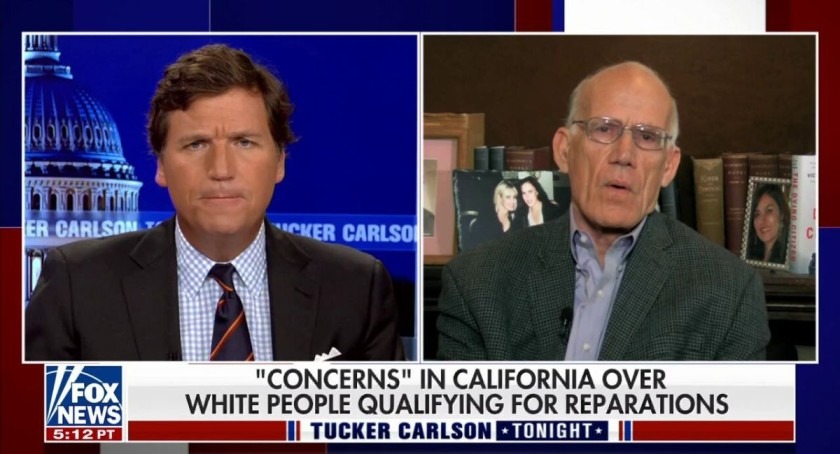
His conservative commentator media presence generates significant income beyond writing alone. Fox News regularly features him as an expert guest, with cable news appearances typically compensated.
His recognizable name and articulate defenses of conservative positions make him a valuable booking for producers. Podcast appearances have exploded, with popular shows paying guests or providing promotional platforms for books.
C-SPAN frequently broadcasts his book talks and presentations, providing free publicity though not direct payment. These appearances reach politically engaged audiences who buy books and invite speakers to events.
YouTube contains countless clips of his commentary, generating views that boost visibility. While he doesn’t run a monetized personal YouTube channel, the platform extends reach beyond traditional media.
His brand value grows with each media appearance, creating intangible assets translating into tangible opportunities. The Victor Davis Hanson salary from media work supplements other income streams significantly.
Professor
His California State University professor career from 1984-2004 established a financial foundation before national prominence. University salaries for full professors typically range from $80,000-120,000 annually, adjusted for California’s higher costs.
Twenty years of steady income with benefits provided security while building reputation. Early retirement at 50 preserved pension benefits while freeing time for more lucrative pursuits. His professor emeritus pension continues paying monthly retirement income.
The Hoover Institution senior fellow position likely provides six-figure annual compensation plus research support. Think tank salaries for prominent fellows often reach $150,000-300,000 depending on stature and fundraising ability.
Visiting professorships at Pepperdine (2009-2015) and Hillsdale College generated additional income atop base salary. Lecture fees at universities nationwide supplement speaking circuit earnings.
Academic credentials justify premium rates for his expertise. The Victor Davis Hanson education investment paid substantial returns through professor income and credibility boosting other opportunities.
Speaks and Engagements
Speaking fees constitute a major component of Victor Davis Hanson net worth accumulation. Reports suggest he commands $20,000-50,000 per engagement, varying by event prestige and audience size.
Conservative conferences, corporate events, and university lectures fill his calendar throughout the year. Major gatherings like CPAC or Federalist Society events pay premium rates for recognized names. His ability to articulate conservative principles using classical analogies makes him a unique draw.
Book tours generate speaking opportunities while promoting sales, creating dual revenue benefits. Virtual speaking exploded post-pandemic, allowing him to reach more audiences without travel demands.
International engagements occasionally arise, commanding even higher fees plus expenses. Political fundraisers and campaign events seek his endorsement and attendance. The political commentator monetizes expertise through personal appearances more lucratively than most academics achieve.
Farm Owner
The Central Valley farm owner status provides an often-overlooked wealth component in Victor Davis Hanson net worth calculations. His family has owned the same property since the 1870s, accumulating five generations of appreciation.
California agricultural land values have risen dramatically over 150 years despite periodic downturns. The property likely appraises in multiple millions based on acreage and development potential. Water rights attached to farming operations carry enormous value in drought-challenged California.
Vineyard and orchard operations generate agricultural income separate from writing and speaking. While California farming economics have squeezed small operations he laments in “Mexifornia,” the land itself appreciates as an asset.
The farm represents generational wealth preservation alongside emotional connection to family heritage. His American historian identity intertwines with being a working farmer in ways that distinguish him from purely academic intellectuals.
Is Victor Davis Hanson Christian?
Is Victor Davis Hanson Christian? Yes, he identifies as American Protestant, though details about his specific denomination or church attendance remain private.
His Christian worldview influences his writing about Western civilization, which he often describes in terms of Judeo-Christian values versus other traditions.
The classics historian sees Christianity as a foundational element in Western culture’s development, shaping individualism and human dignity concepts.
Victor Davis Hanson Accident
There is no widely documented or confirmed public record of a major accident involving Victor Davis Hanson. However, minor incidents or health-related challenges occasionally appear in personal interviews and discussions about his life on his family farm in California’s Central Valley.
Hanson has spoken about the physical demands and risks of agricultural work, which may lead some readers to search for information on accidents or injuries. As of the latest available information, no significant accident has been reported that impacted his career, public appearances, or writing.
Social Media Profiles and Presence
Victor Davis Hanson maintains an active online presence through several platforms where he shares commentary on politics, history, and current events.
He frequently publishes long-form essays on his official website VDH’s Private Papers and posts syndicated columns through National Review and other outlets.
Hanson is also active on X (formerly Twitter), where he comments on global affairs and promotes new interviews and book releases.
Lesser Known Facts About Victor Davis Hanson
- Grew up on a fifth-generation family farm in California.
- Worked as a full-time farmer before entering academia.
- His classical research is heavily influenced by real farming experience.
- Originally specialized in ancient agrarian life and warfare.
- Lost his youngest daughter, Susannah, to leukemia in 2014.
- Comes from Swedish and Welsh ancestry.
- Named after a cousin killed in World War II at Okinawa.
- Has taught at Stanford, Pepperdine, the Naval Academy, and Hillsdale.
- Longtime columnist for National Review and other outlets.
- Lives on the same family farm established in the 1870s.
FAQ’s
What is Victor Davis Hanson known for?
He’s a classicist, military historian, and political commentator.
What is Victor Davis Hanson net worth?
His net worth is commonly estimated in the multi-million range.
Where does Victor Davis Hanson live?
He lives on his family farm in Selma, California.
Is Victor Davis Hanson still teaching?
He is professor emeritus and active through the Hoover Institution.
What books has Victor Davis Hanson written?
Notable titles include The Western Way of War and Carnage and Culture.
Conclusion
Victor Davis Hanson remains a significant figure in American intellectual and political life, known for his contributions to classical scholarship, military history, and contemporary commentary.
His unique combination of academic expertise and agricultural background has shaped a career that resonates across diverse audiences. Whether discussing public policy, ancient warfare, or cultural trends, Hanson’s insights continue to influence national conversations.
